 Angie Lee
If you have scoliosis, one of the first questions that may come to mind is simple:
“What should I avoid?”
The direct answer is this:
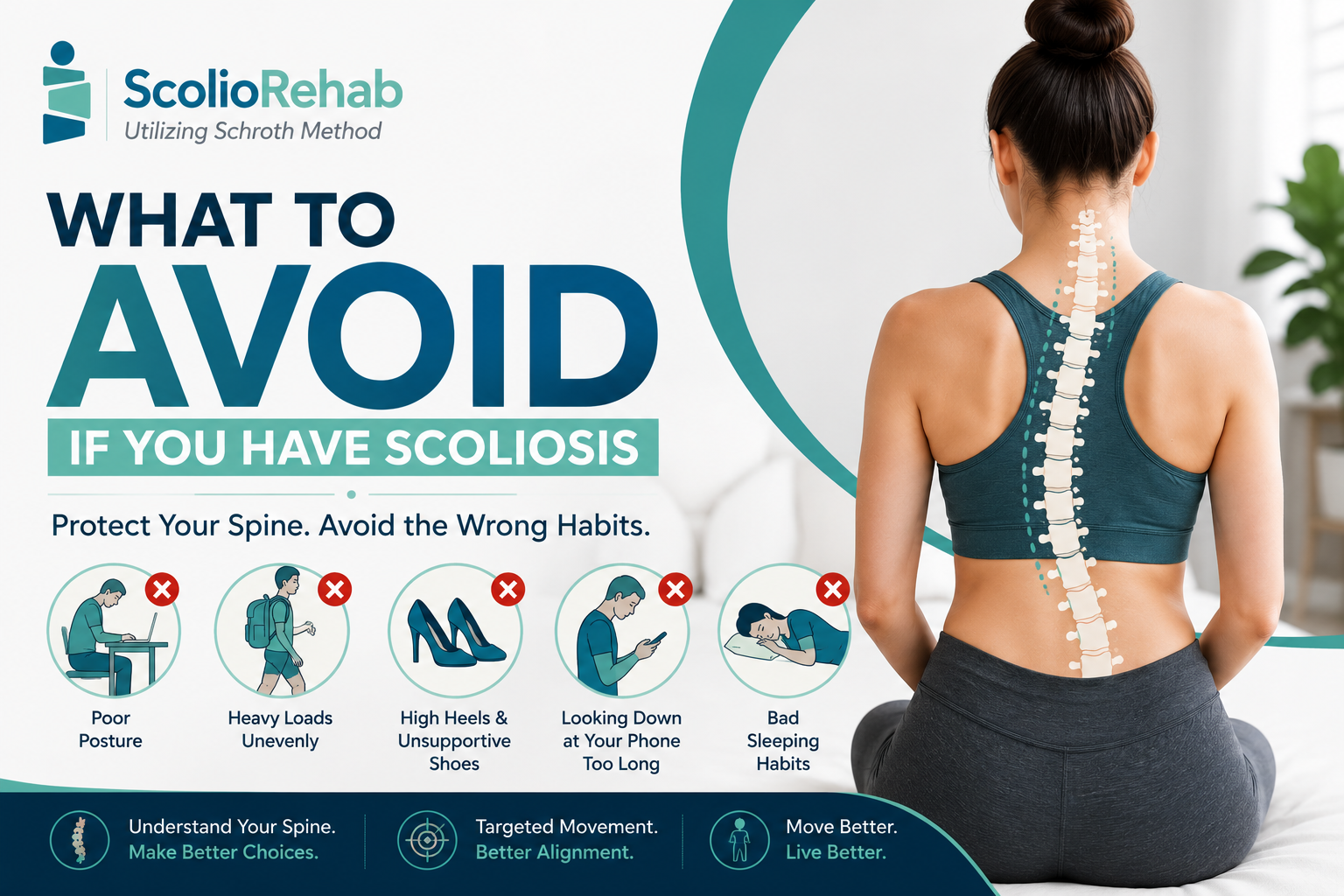
If you have scoliosis, avoid ignoring your curve, staying in one position for too long, forcing “perfect posture,” suddenly doing heavy exercise without proper progression, copying random online exercises, carrying heavy loads unevenly, and delaying assessment when symptoms or posture changes become noticeable.
This does not mean you need to live carefully every second of the day.
Most people with scoliosis can still study, work, exercise, travel, and stay active. But certain habits may make discomfort worse or delay proper care.
The goal is not to fear movement.
The goal is to understand which daily habits deserve more attention so you can take better care of your spine, posture, and overall comfort.
Let’s check out our 9 list to avoid if you have scoliosis:
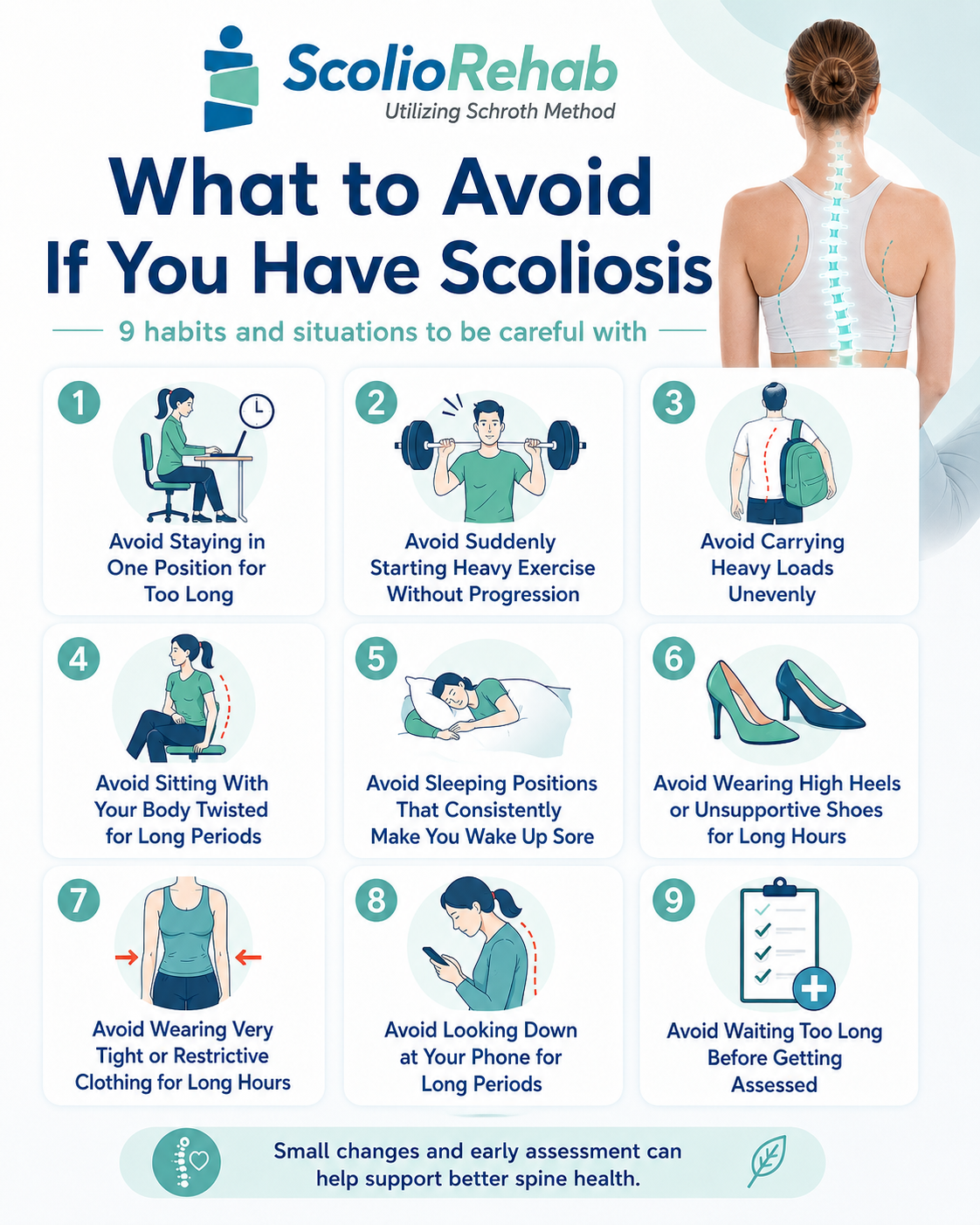
1. Avoid Staying in One Position for Too Long
Scoliosis does not mean sitting, standing, or sleeping is dangerous.
But staying in one position for too long may make the body feel stiff, tired, or uncomfortable.
This is common among students, office workers, and people who spend long hours using laptops or phones.
For example, sitting for hours without changing position may increase pressure in certain areas of the back, hips, shoulders, or neck. Standing in one posture for too long may also cause fatigue. Even sleeping in one uncomfortable position may lead to stiffness in the morning.
The issue is not always the position itself.
The issue is being stuck in the same position for too long.
If you have scoliosis, try to build small movement breaks into your day. Stand up, walk around, stretch gently, or change your sitting setup. These small changes often help more than trying to maintain one “perfect” posture all day.
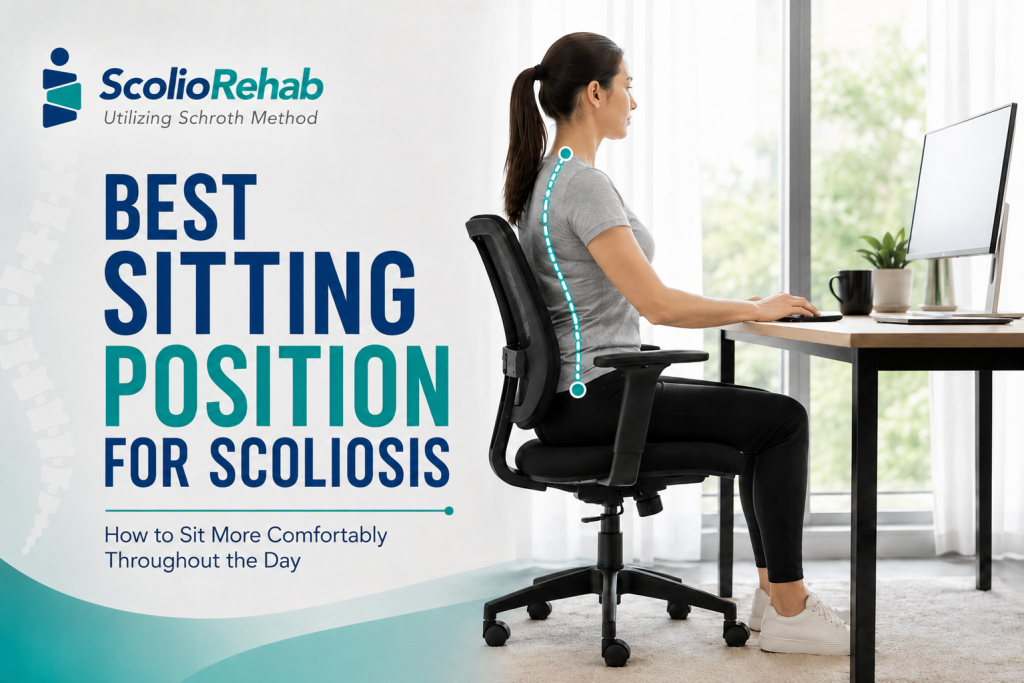
Read Also: Best Sitting Position for Scoliosis
2. Avoid Suddenly Starting Heavy Exercise Without Progression
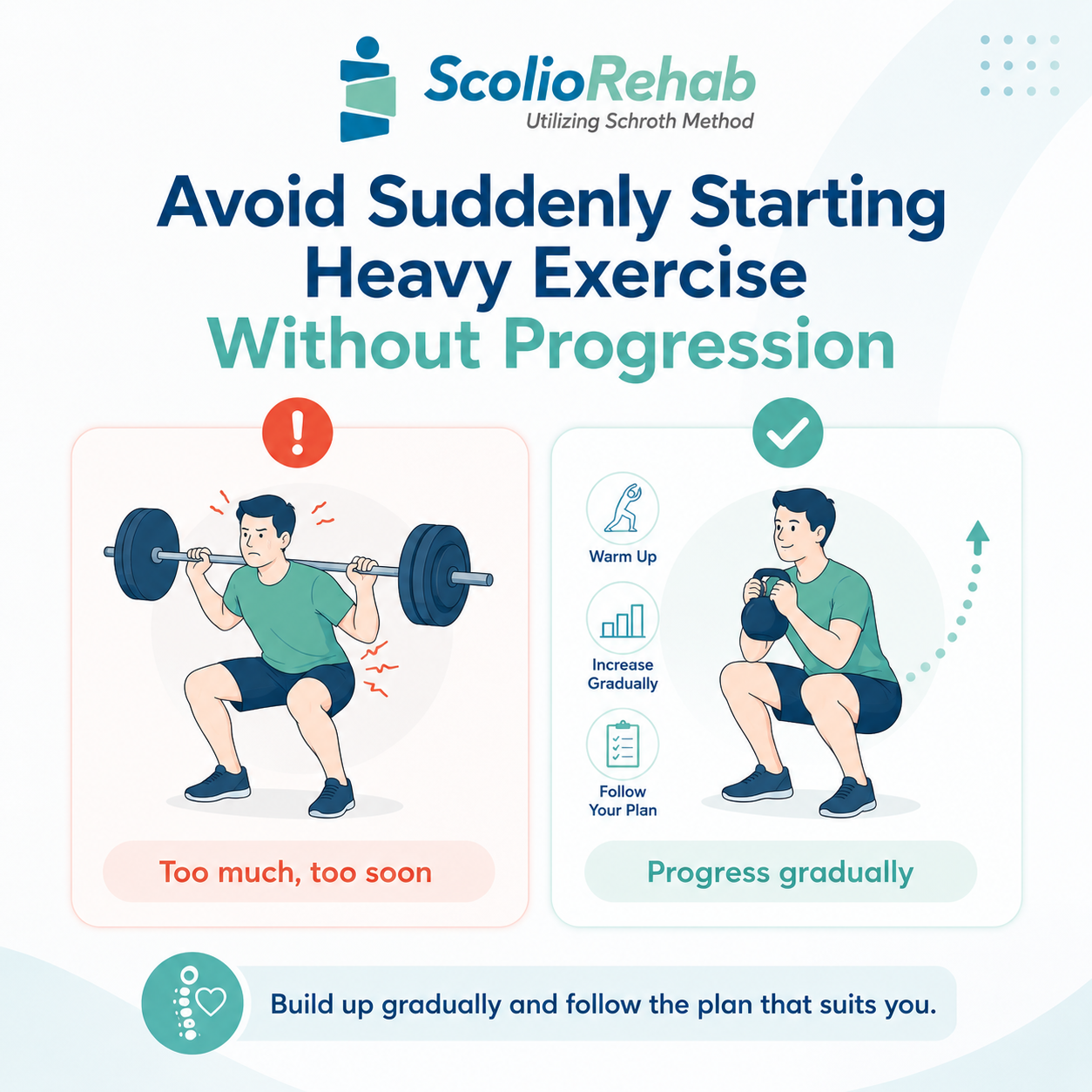
Exercise is not something people with scoliosis automatically need to avoid.
In many cases, staying active is helpful for general health, strength, and confidence. But what should be avoided is suddenly jumping into intense exercise without preparation.
For example, someone who has not trained for months may suddenly start heavy squats, deadlifts, high-intensity workouts, or long sports sessions. The body may not be ready for that sudden increase in load.
This is not only a scoliosis issue. It applies to most people.
But with scoliosis, the body may already have some asymmetry, muscle imbalance, or areas that fatigue faster. That means sudden increases in intensity may feel more uncomfortable.
A better approach is gradual progression.
Start with manageable activity. Build consistency. Pay attention to how your body responds. Increase intensity slowly instead of proving everything in one session.
If an exercise repeatedly causes discomfort, do not just push harder. Modify it, reduce the load, or seek professional advice.
If you want to exercise for scoliosis, it is better to understand what the exercise is trying to achieve. Is it for mobility? Strength? Breathing? Postural awareness? Pain management? General fitness?
At ScolioRehab, we offer schroth method exercise, a scoliosis specific exercise to improve your scoliosis condition.
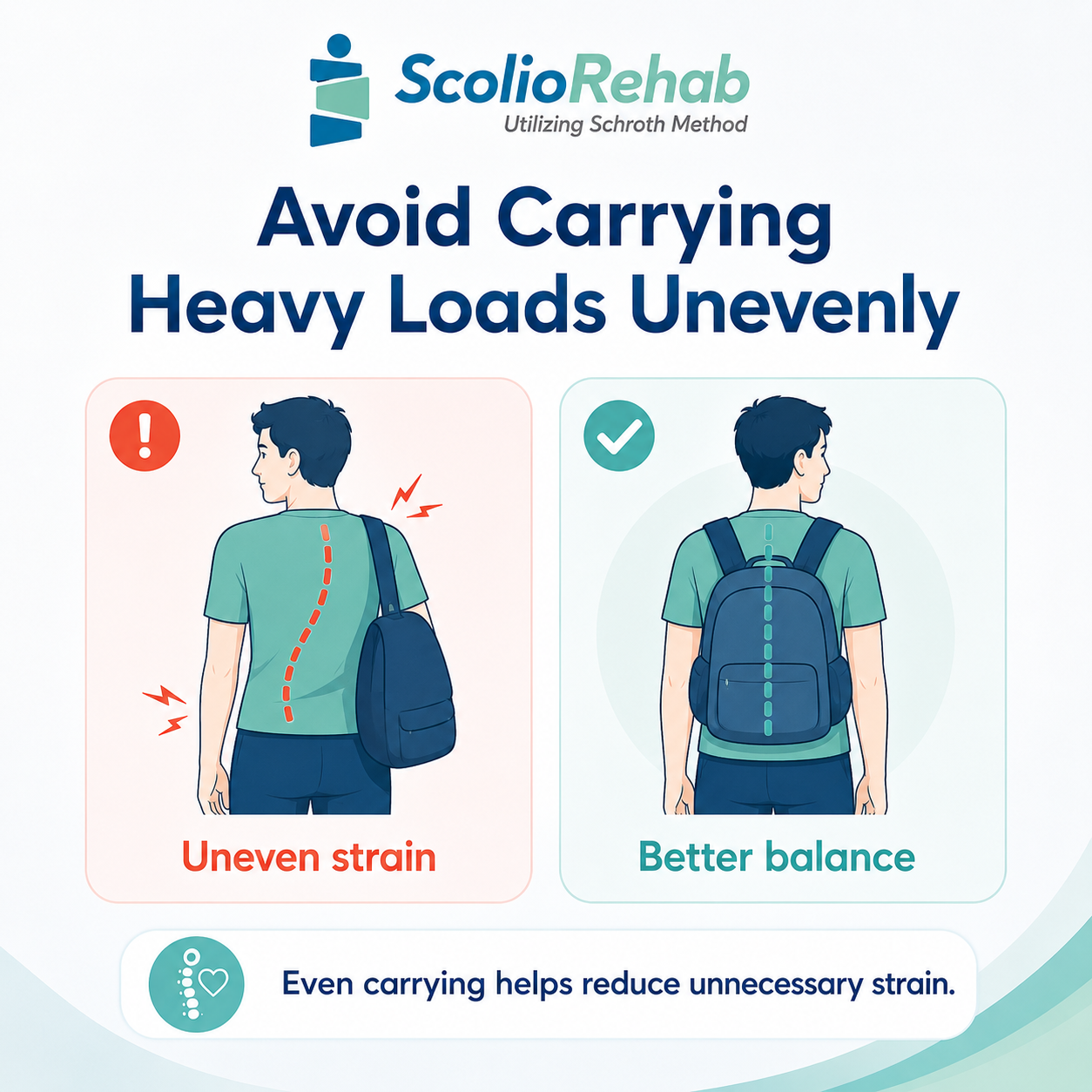
3. Avoid Carrying Heavy Loads Unevenly
Daily habits matter.
One common issue is carrying heavy bags on one side repeatedly.
This may include school bags, laptop bags, handbags, gym bags, or work equipment. Carrying weight on one shoulder may not cause scoliosis by itself, but it can create uneven loading and may feel uncomfortable for some people.
This is especially relevant for students.
If a school bag is too heavy or always carried on the same side, the body may compensate by leaning, hiking one shoulder, or shifting weight.
A better habit is to reduce unnecessary load, use both straps when using a backpack, and keep the bag close to the body. If carrying a single-strap bag, switch sides occasionally and avoid overloading it.
Again, the goal is not panic. The goal is reducing repeated uneven stress where possible.
4. Avoid Sitting With Your Body Twisted for Long Periods
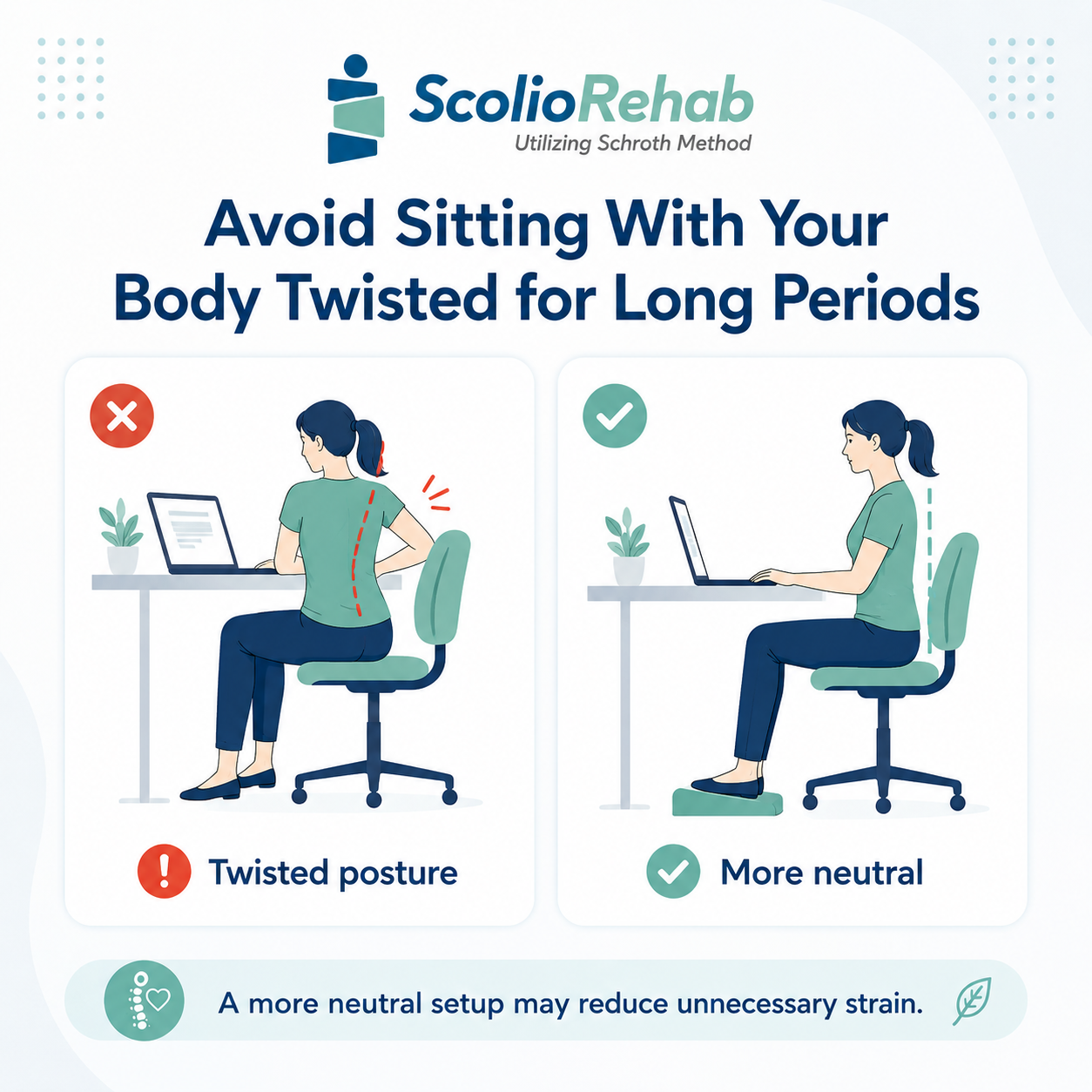
Many people sit in twisted positions without realizing it.
For example:
- Sitting with one leg tucked under the body.
- Leaning heavily to one side.
- Turning the upper body toward a laptop while the hips face another direction.
- Using a phone while curled to one side.
These habits may not seem like a big deal at first, but repeated over many hours, they may contribute to discomfort.
If you have scoliosis, try to make your sitting setup simple and supportive.
Face your screen directly. Keep both feet supported. Avoid sitting on one hip for long periods. Use a chair that allows your body to rest without excessive leaning.
This does not mean you must sit perfectly still.
Actually, the opposite is true.
It is better to change position regularly than to hold one twisted posture for hours.
5. Avoid Sleeping Positions That Consistently Make You Wake Up Sore
There is no single sleeping position that everyone with scoliosis must avoid.
But there is one simple rule: Avoid sleeping positions that consistently make you wake up worse.
Some people feel uncomfortable sleeping on their stomach because the neck stays rotated and the lower back may feel more extended. Others feel stiff after curling tightly into a ball. Some people wake up sore after sleeping twisted without proper support.
If a position repeatedly causes discomfort, it is worth adjusting.
For many people, side sleeping with a pillow between the knees or back sleeping with support under the knees may feel more comfortable. But the best setup depends on the individual.
The goal is not to “correct” scoliosis while sleeping.
The goal is to help the body rest with less unnecessary strain.
For more details, read our article about Best Sleeping Positions for Scoliosis
6. Avoid Wearing High Heels or Unsupportive Shoes for Long Hours
Footwear may not be the first thing people think about when discussing scoliosis, but it can affect how the body feels during walking, standing, and daily activity.
If you have scoliosis, it is better to avoid wearing high heels for long hours, especially if they make your back, hips, knees, or feet feel more tired.
High heels can change how your weight is distributed when standing and walking. For some people, this may increase strain through the lower back, hips, and legs. This does not mean you can never wear heels, but wearing them for long periods every day may not be the best choice if you already experience discomfort.
The same applies to very flat, worn-out, or unsupportive shoes.
If your shoes do not provide enough support, your body may compensate during walking or standing. Over time, this may make daily discomfort more noticeable.
A more practical approach is to choose shoes that feel stable, comfortable, and supportive for your usual daily activities. If you need to wear heels for an event, try to limit the duration, take breaks when possible, and avoid combining it with long periods of standing or walking.
The goal is not to avoid all stylish shoes forever but is to avoid footwear habits that repeatedly make your body feel worse.
7. Avoid Wearing Very Tight or Restrictive Clothing for Long Hours
Clothing does not cause scoliosis and wearing tight clothes will not directly make a spinal curve worse.
However, very tight or restrictive clothing may make some people with scoliosis feel less comfortable during daily activities.
For example, tight waistbands, stiff tops, or clothing that limits movement may make it harder to sit, breathe deeply, stretch, or move freely. Some people may also feel more aware of uneven shoulders, rib prominence, or body asymmetry when wearing very fitted clothing.
This does not mean you need to avoid fitted clothes completely.
The main thing to avoid is wearing clothing that repeatedly makes you feel restricted, uncomfortable, or more tense throughout the day.
For people who wear a scoliosis brace, clothing choice becomes even more important. Soft, breathable, and smooth layers under the brace may help reduce friction and skin irritation. Clothes worn over the brace may also need slightly more room so movement feels easier and the brace does not feel overly compressed.
A practical approach is to choose clothing that allows comfortable movement, does not press too tightly around the ribs or waist, and feels manageable for your daily routine.
8. Avoid Looking Down at Your Phone for Long Periods
Many people spend hours looking down at a phone, tablet, or laptop without realizing how long they have stayed in that position.
This habit does not cause scoliosis. However, it may increase neck, shoulder, or upper back discomfort, especially if the posture is held for a long time.
For people with scoliosis, the body may already feel uneven or easily tired in certain positions. Looking down continuously may make the neck and upper back feel more strained.
A better habit is to bring the screen closer to eye level, take short breaks, and avoid using the phone in one fixed posture for too long.
9. Avoid Waiting Too Long Before Getting Assessed
Many people wait because they are unsure whether their scoliosis is “serious enough.”
But assessment does not mean you are committing to treatment immediately.
Assessment helps you understand the situation.
It may help answer:
- What type of curve do I have?
- What is my Cobb angle?
- Is the curve mild, moderate, or severe?
- Am I still at risk of progression?
- Do I need monitoring, exercise, bracing, or other management?
- Is my discomfort related to scoliosis or something else?
Waiting too long can create uncertainty. A proper assessment gives clearer direction.
This is especially important for growing children and teenagers, because timing can matter.
When Should You Seek Professional Advice?
You should consider assessment if you notice visible posture changes, frequent back discomfort, discomfort that affects sleep, difficulty sitting or standing for long periods, or uncertainty about which activities are suitable.
For children and teenagers, assessment is especially important if there are signs such as uneven shoulders, uneven hips, rib prominence, or posture changes during growth.
Getting checked early does not mean the condition is severe. It simply means you are taking the right step instead of guessing.
Check out our complete guidance about all the possible scoliosis treatment in Malaysia.
Frequently Asked Questions
What should I avoid if I have scoliosis?
To summarize, avoid ignoring scoliosis, staying in one position for too long, carrying heavy loads unevenly, forcing posture, copying random exercises, and delaying assessment when symptoms or posture changes appear.
Can people with scoliosis exercise?
Many people with scoliosis can exercise. The key is choosing suitable activity, progressing gradually, and avoiding movements that repeatedly cause discomfort.
Should I avoid sports if I have scoliosis?
Not always. Many people with scoliosis continue sports. It depends on the individual, symptoms, curve severity, and activity intensity.
Should I avoid carrying a backpack?
You do not need to avoid backpacks completely, but avoid carrying excessive weight or using only one shoulder repeatedly.
Should I avoid all twisting movements?
Not necessarily. Normal movement includes rotation. However, repeated forceful twisting or uncomfortable movements may need modification.
When should I get scoliosis assessed?
Consider assessment if posture changes are noticeable, discomfort persists, daily activity is affected, or the person is a child or teenager still growing.
Medical References
- National Institute of Arthritis and Musculoskeletal and Skin Diseases (NIAMS) — Scoliosis diagnosis, treatment, exercise, and activity guidance.
- Scoliosis Research Society — Patient information on living with scoliosis, exercise, and bracing.
- NHS — Scoliosis overview and clarification that scoliosis is not caused by posture, exercise, or diet.
- Mayo Clinic — Scoliosis diagnosis and treatment considerations, including curve size and growth stage.