 Angie Lee
If you have scoliosis, you may have noticed something frustrating:
You can feel completely fine while moving around. But after sitting for a while, your back starts feeling tired, stiff, uneven, or uncomfortable.
This is one of the most common concerns among people living with scoliosis.
Questions such as:
- “Am I sitting wrongly?”
- “Can sitting worsen scoliosis?”
- “Should I sit completely straight?”
- “Is there a best sitting position for scoliosis?”
come up frequently.
The good news is that sitting itself does not cause scoliosis and usually does not change the spinal curve.
However, prolonged sitting posture may influence comfort, muscle fatigue, pressure distribution, and how your body feels throughout the day.
The goal is not to force perfect posture.
The goal is to create a sitting setup that allows your body to stay comfortable and supported.
Can Sitting Affect Scoliosis?
Sitting does not cause scoliosis.
Likewise, sitting in a certain way does not usually increase or reduce the spinal curve directly.
However, scoliosis may influence how sitting feels.
Because scoliosis can affect alignment between the spine, ribs, shoulders, and pelvis, some individuals may experience:
- Uneven pressure while sitting
- Back fatigue
- One side feeling more loaded
- Shoulder tension
- Neck discomfort
- Restlessness during long sitting sessions
This is why improving sitting habits may still make a meaningful difference to daily comfort.
For a broader explanation of spinal curves and scoliosis, read What Is Scoliosis.
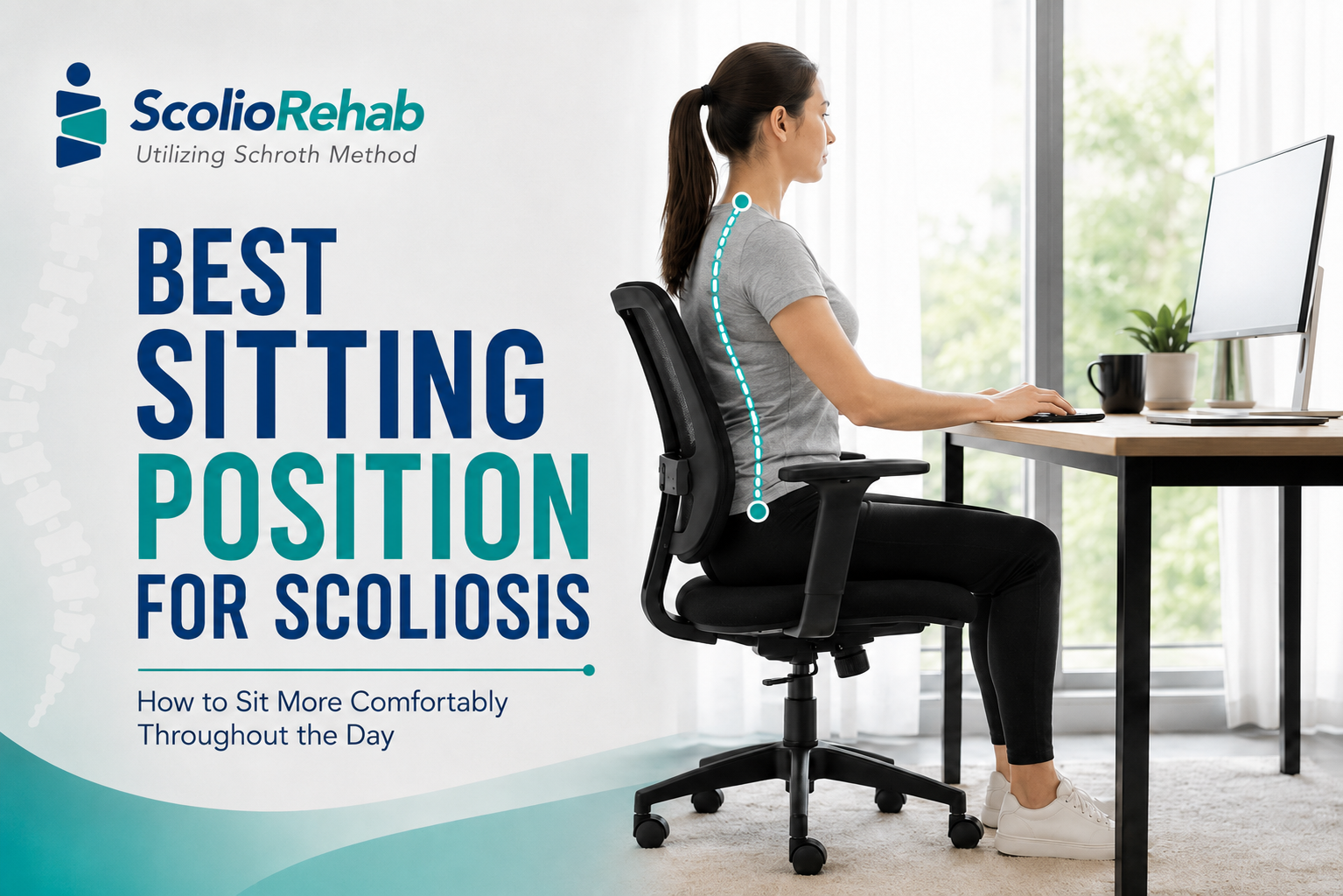
What Is the Best Sitting Position for Scoliosis?
There is no single sitting position that works for everyone. But most people benefit from the following principles.
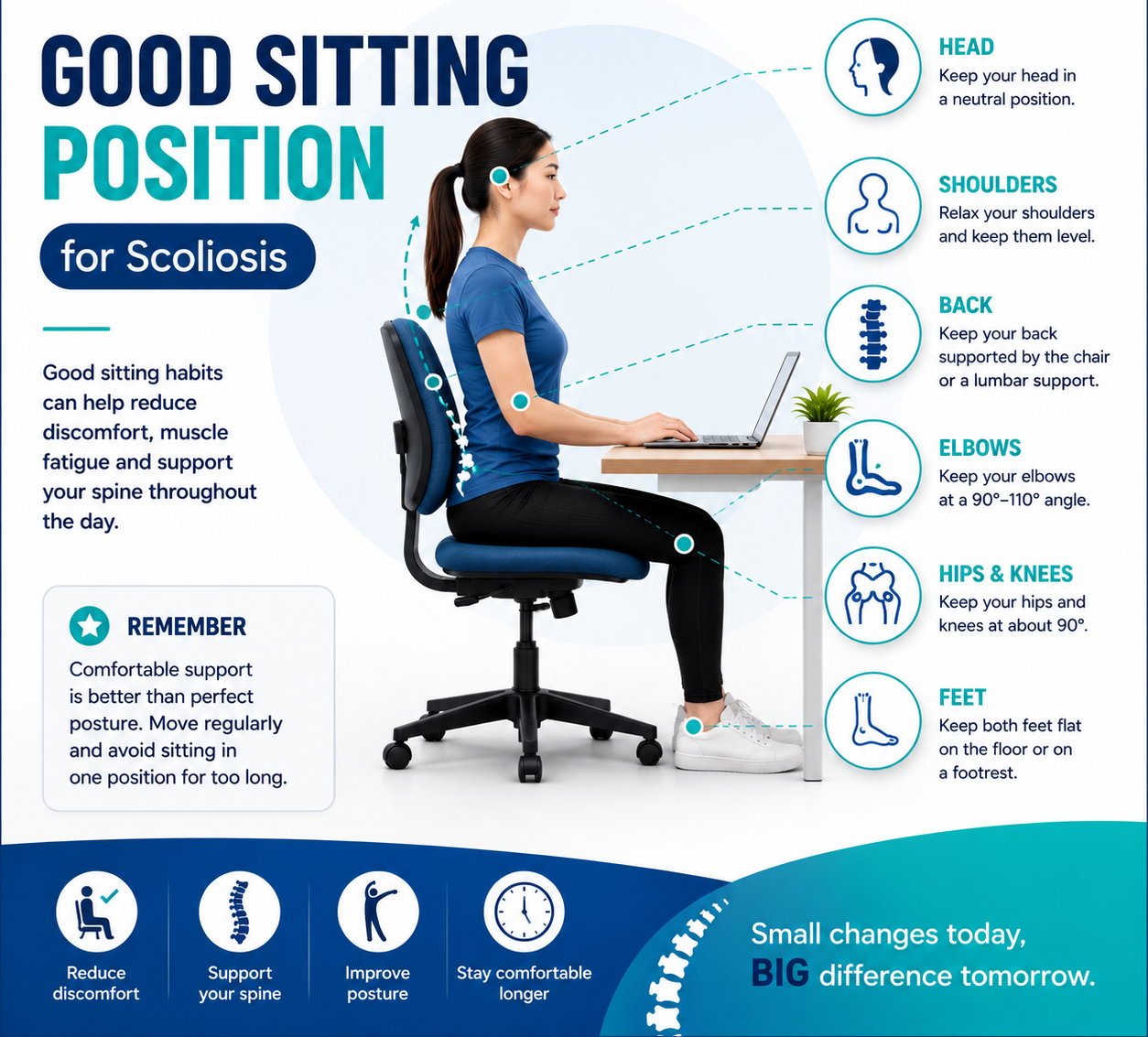
1. Sit With Your Back Supported
Choose a chair that supports your natural posture.
Avoid sitting away from the backrest for long periods.
Instead:
✓ Sit fully into the chair
✓ Allow the backrest to support your back
✓ Keep shoulders relaxed
Support should feel natural, not forced.
2. Keep Both Feet Supported
Your feet should ideally rest comfortably on the floor.
Avoid:
✕ One foot hanging
✕ Crossing legs for prolonged periods
✕ Sitting twisted
If needed:
- use foot support
- slightly adjust seat height
3. Keep Hips and Knees Comfortable
Aim for approximately:
- knees around hip level
- hips supported
- pelvis relaxed
Avoid extreme leaning.
4. Keep Head Positioned Naturally
Many people accidentally do this:
Phone → forward head
Laptop → forward shoulders
Over time this may create unnecessary tension.
Try to:
✓ Keep screen closer to eye level
✓ Relax shoulders
✓ Avoid looking downward continuously
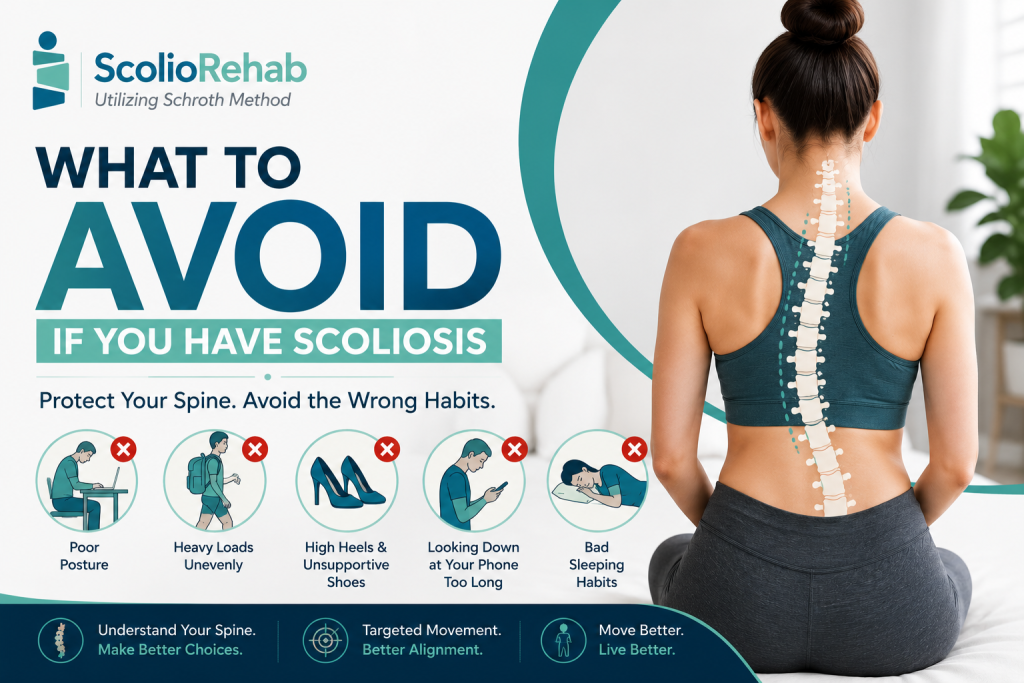
Sitting Positions That May Feel Less Comfortable
Again, these positions are not “forbidden.” But some people notice increased discomfort.
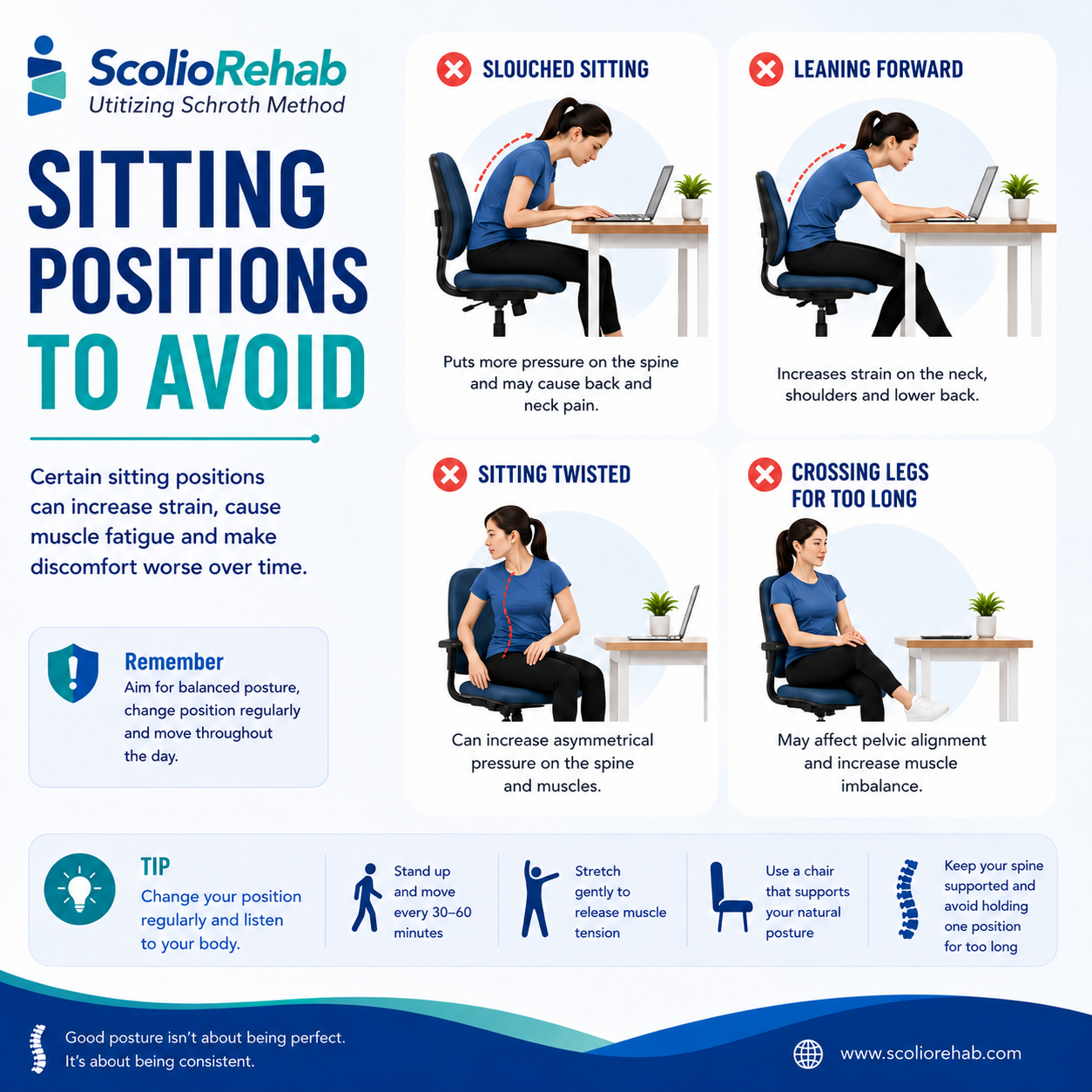
1. Extremely Slouched Sitting
Excessive slouching may:
- increase fatigue
- encourage prolonged uneven loading
- make sitting feel harder
Try adjusting position instead of forcing stiffness.
2. Unsupported Forward Leaning
Common during:
- laptop work
- studying
- phone use
This may increase:
- neck effort
- shoulder tension
3. Sitting Twisted
Repeated twisting while sitting may create unnecessary asymmetrical loading.
Examples:
- one leg tucked under
- leaning on one side
- rotated posture
Best Chair Setup for Scoliosis
People often ask: “Do I need an expensive ergonomic chair?” Not necessarily.
More important factors: Chair Height. Your feet should remain supported.
1. Seat Depth
You should sit comfortably without excessive pressure behind knees.
2. Back Support
Support should feel stable but not push aggressively.
3. Arm Support
Shoulders should remain relaxed.
A comfortable setup usually matters more than buying expensive furniture.
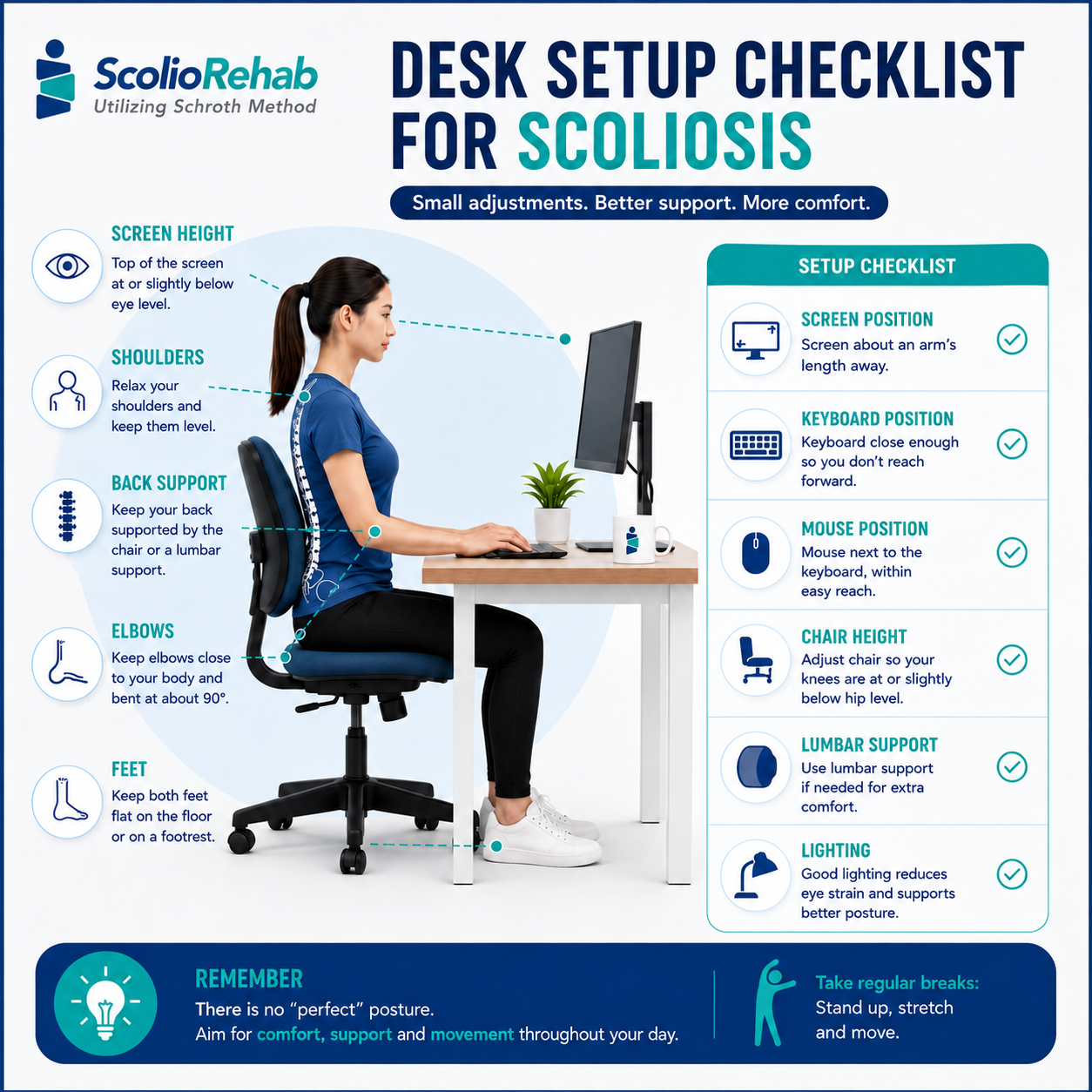
Desk and Laptop Setup
Desk setup can make a noticeable difference.
Try this checklist:
- Top of screen near eye level
- Elbows relaxed
- Keyboard within reach
- Avoid leaning forward
- Keep shoulders relaxed
Laptop users may consider:
- external keyboard
- laptop stand
How Long Should You Sit?
There is no universal limit. But remaining in one position too long may feel uncomfortable.
Move regularly every 30 to 60 minutes. Stand briefly, stretch, reposition. The body generally likes movement.
Daily Habits That May Help
Simple habits:
- Alternate positions
- Adjust workstation
- Walk periodically
- Sleep comfortably
- Stay active
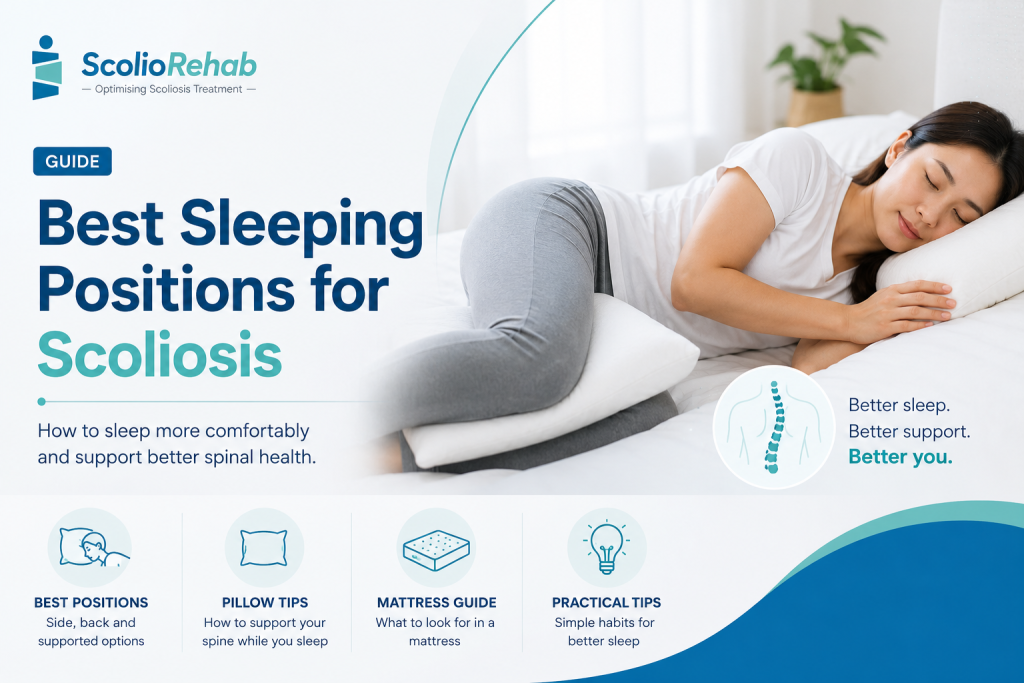
You may also read: Best Sleeping Positions for Scoliosis
When Should You Seek Assessment?
Occasional discomfort while sitting can be normal.
Consider assessment if:
- discomfort becomes persistent
- sitting affects work or school
- posture changes noticeably
- daily activities become difficult
Understanding posture, movement patterns, and overall spinal mechanics may provide clearer direction.
You can also explore Scoliosis Treatment Malaysia and Schroth Method for more information.
Frequently Asked Questions
Can sitting worsen scoliosis?
Sitting does not usually worsen scoliosis, but prolonged uncomfortable sitting may affect how your body feels.
Is an ergonomic chair necessary?
Not always. Comfort, support, and proper setup often matter more.
Should people with scoliosis sit perfectly straight?
Not necessarily. Aim for comfortable supported posture rather than rigid posture.
Is crossing legs bad for scoliosis?
Occasional crossing is usually not a problem, but prolonged asymmetrical positions may feel uncomfortable for some individuals.
How often should I stand up?
Many people find changing position every 30–60 minutes helpful.
Medical Source
- National Institute of Arthritis and Musculoskeletal and Skin Diseases (NIAMS) – Scoliosis
→ Good for general scoliosis explanation. - Scoliosis Research Society – Patient Information
→ Strong authority and relevant. - NHS – Posture and Back Health
→ Supports sitting posture advice. - Mayo Clinic – Scoliosis Overview
→ High trust medical reference.