 Angie Lee
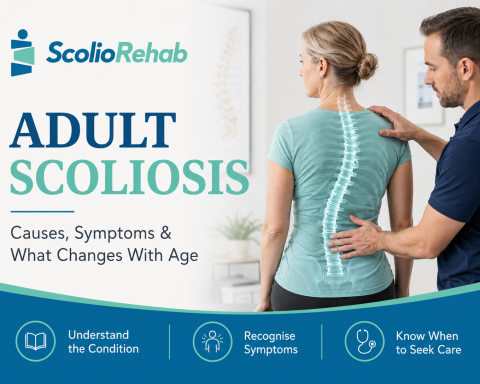
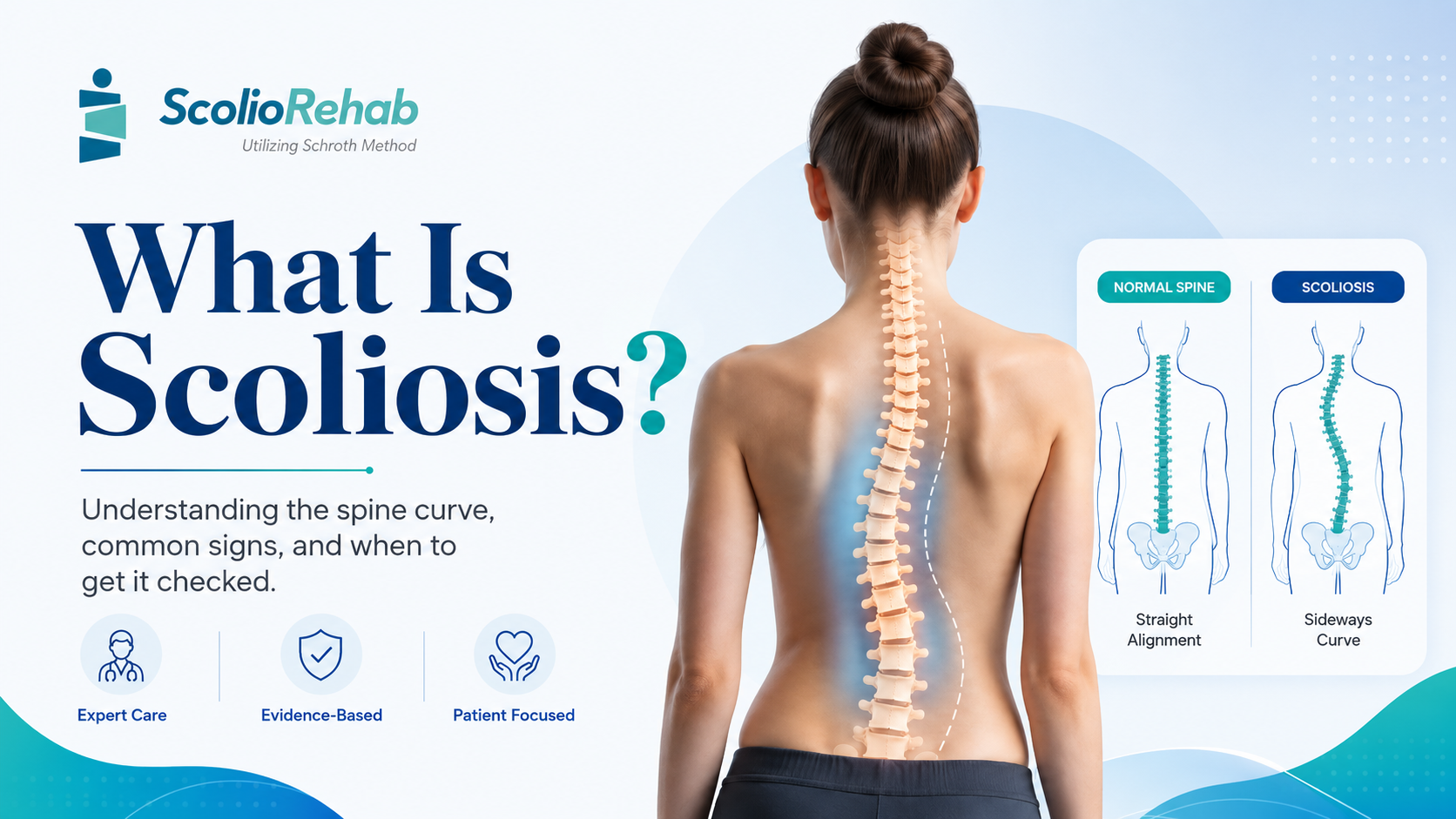
Scoliosis is a condition where the spine curves sideways instead of staying straight when viewed from the back. In some people, the curve may look like a “C” shape. In others, it may form more of an “S” shape.
Many cases of scoliosis are first noticed through changes in posture rather than pain. A parent may notice that one shoulder looks higher, the waist appears uneven, or the body seems to lean slightly to one side. Some people only find out they have scoliosis after an X-ray done for another reason.
Not every spinal curve is severe, but scoliosis should not be ignored. The earlier it is detected, the easier it is to monitor the condition and understand whether further care may be needed.
This article explains scoliosis in a simple way: what it means, what signs to look for, why it happens, and when it should be checked.
What Happens to the Spine in Scoliosis?
In a healthy spine, the back should appear mostly straight when viewed from behind. With scoliosis, the spine curves sideways.
In some cases, the spine may also rotate slightly. This rotation can cause one side of the ribs or back to appear more prominent, especially when the person bends forward.
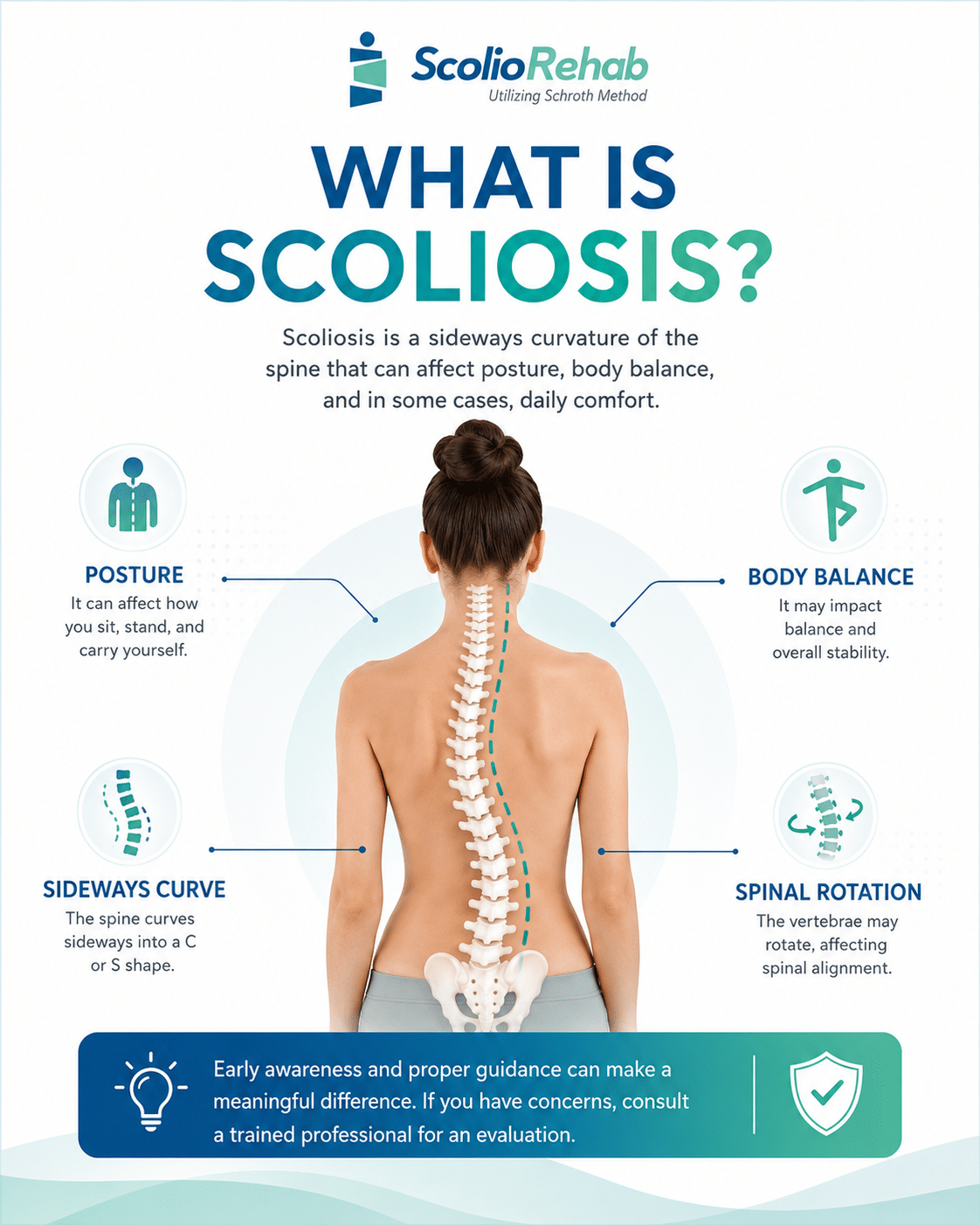
This is why scoliosis is not only about a “bent spine.” It can also affect posture, body balance, shoulder level, waist shape, and how the back looks from behind.
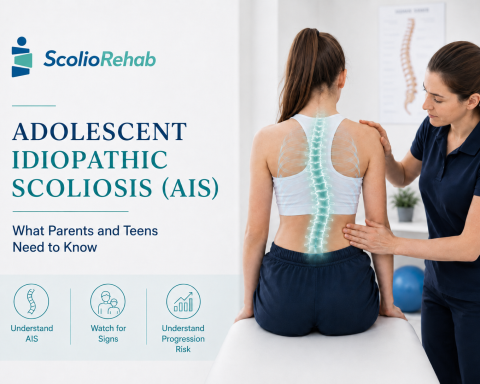
The severity of scoliosis can vary. Some curves are mild and remain stable for years. Others may progress over time, especially during growth periods. This is one reason why scoliosis in children and teenagers should be monitored carefully.
Common Signs of Scoliosis
Scoliosis can be difficult to notice in the early stage because it does not always cause pain. Many children and teenagers with scoliosis can still move normally and carry out daily activities.
Some common signs include:
- One shoulder appears higher than the other
- One hip looks higher or more prominent
- The waist looks uneven
- The body appears to lean to one side
- One side of the ribs or back sticks out when bending forward
- Clothes do not hang evenly on the body
- The head does not seem centered over the body
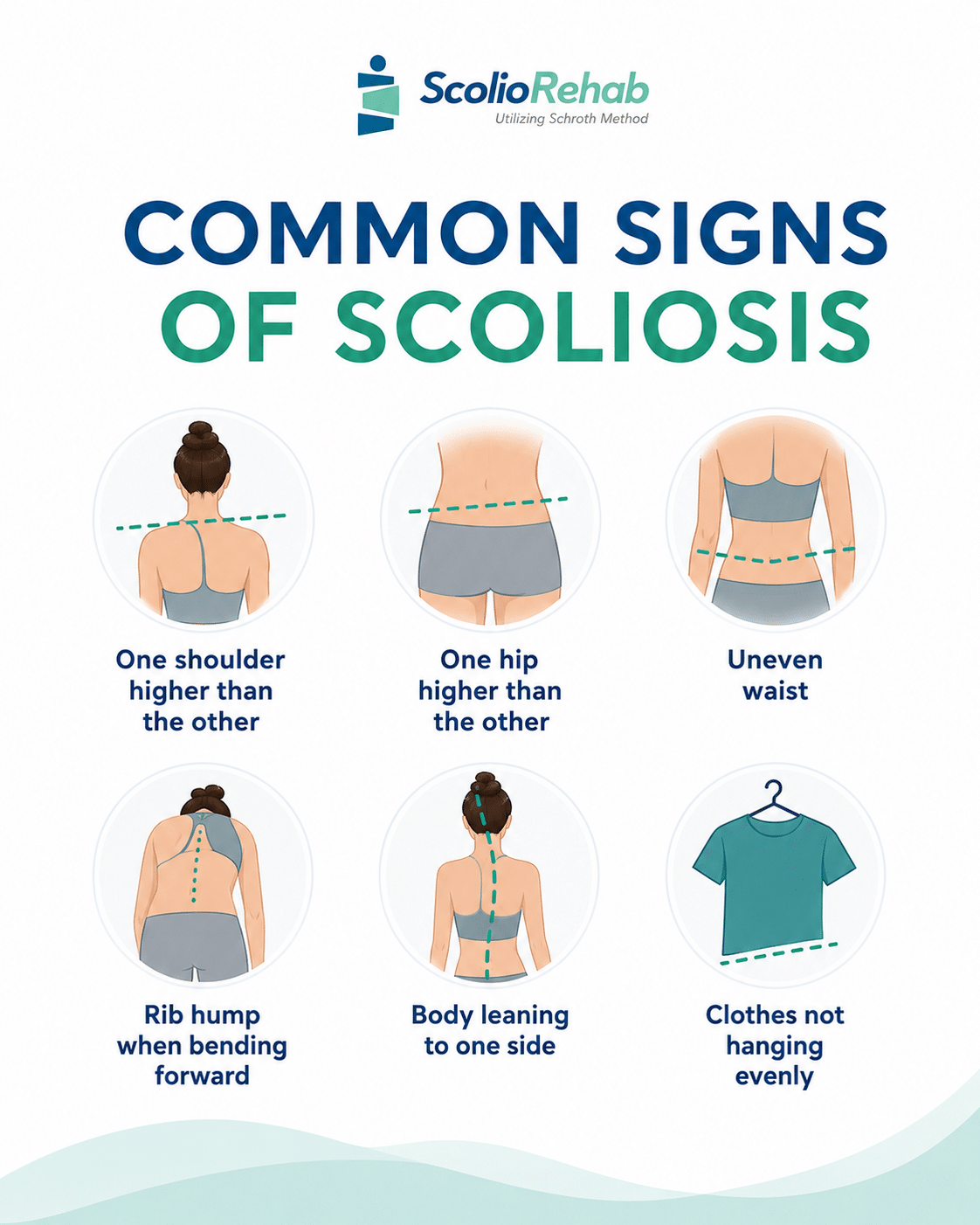
These signs may be subtle at first. In many cases, the curve becomes more noticeable only during a growth spurt, when the body changes quickly.
Parents may notice that a child’s school uniform, shirt, or trousers no longer sit evenly. Some patients may also feel that their posture looks “off,” even if they do not feel pain.
Does Scoliosis Always Cause Pain?
No. Scoliosis does not always cause pain.
In younger patients, especially children and teenagers, scoliosis may be present without any obvious discomfort. This can make the condition harder to detect early because the patient may not complain about anything.
In adults, scoliosis may be more likely to cause symptoms such as back stiffness, muscle tightness, fatigue, or discomfort after sitting or standing for long periods.
However, pain alone does not always show how serious the curve is. A person with a mild curve may feel discomfort, while another person with a larger curve may feel very little pain.
This is why visible posture changes should still be taken seriously, even when there is no pain.
What Causes Scoliosis?
There are different types of scoliosis, and the cause depends on the type.
The most common type is called idiopathic scoliosis. “Idiopathic” means the exact cause is not clearly known. This type often appears during childhood or adolescence, especially around the growth spurt years.
Other possible types include:
- Congenital scoliosis, which develops because of spinal formation issues before birth
- Neuromuscular scoliosis, which is related to nerve or muscle conditions
- Degenerative scoliosis, which may happen in adults due to age-related spinal changes
- Functional scoliosis, where the spine may appear curved because of another issue such as leg length difference or postural imbalance
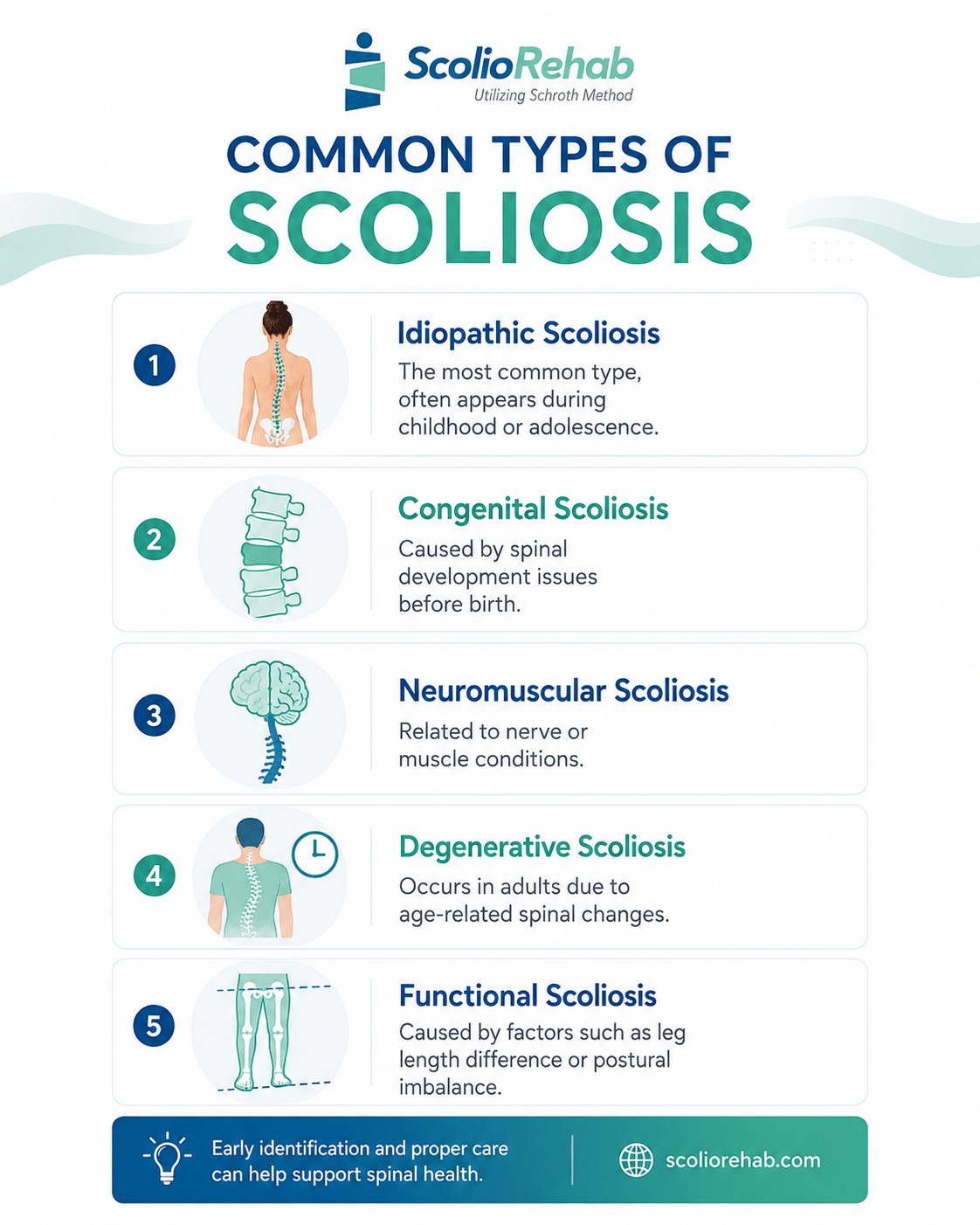
Because scoliosis can happen for different reasons, the next step should depend on the patient’s age, curve pattern, and overall condition.
This is also why guessing the cause based only on appearance is not enough. A proper assessment helps determine whether the curve is structural, functional, mild, progressive, or related to another condition.
How Is Scoliosis Checked?
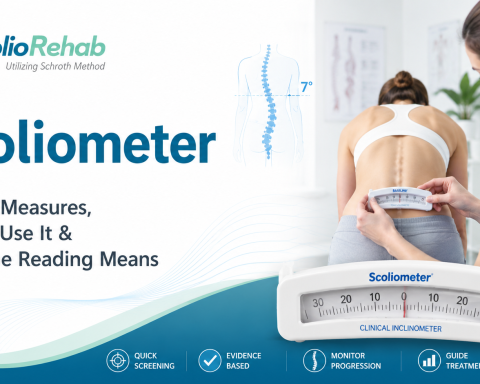
A scoliosis assessment usually begins with observation of posture and body alignment. The examiner may look at the shoulder height, waistline, hip level, and overall spinal balance.
One common screening method is the forward bend test. In this test, the person bends forward while the back is observed from behind. If one side of the ribs or back appears more raised, scoliosis may be suspected.
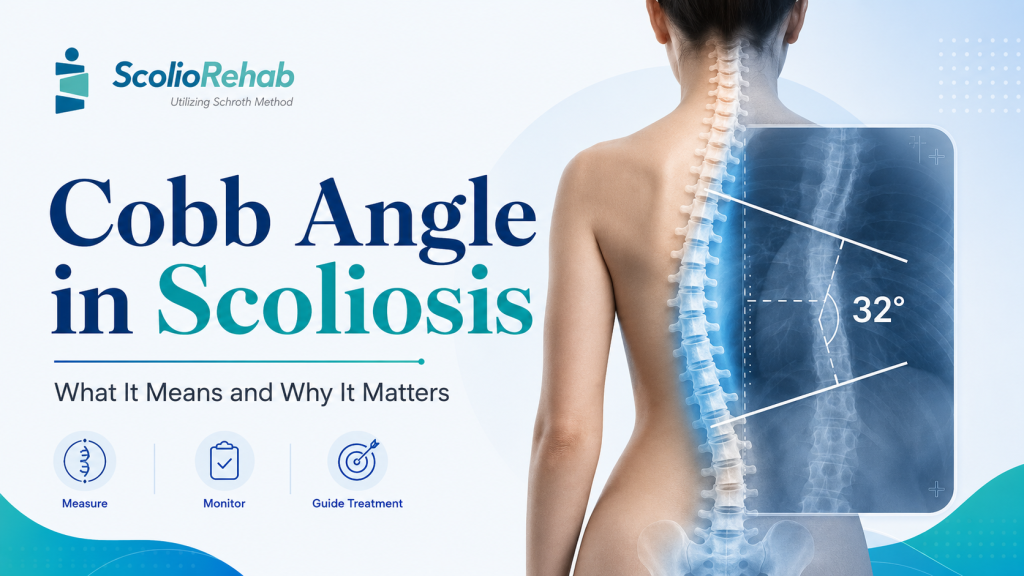
If needed, an X-ray may be recommended. An X-ray helps measure the spinal curve more accurately using the Cobb angle.
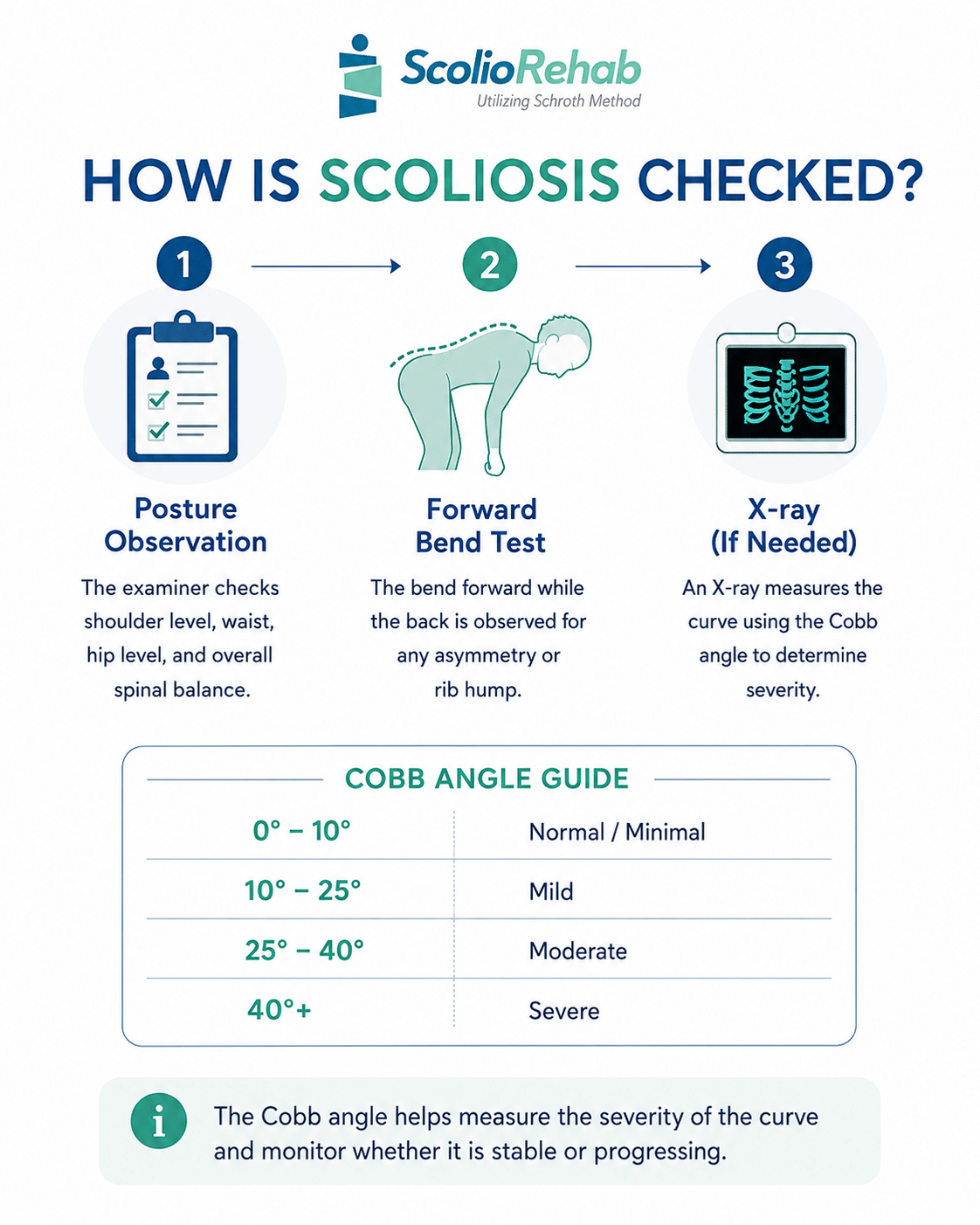
The Cobb angle is used to estimate the degree of spinal curvature. This measurement helps determine whether the curve is mild, moderate, or severe. It is also useful for monitoring whether the curve changes over time.
A visual check can suggest scoliosis, but an X-ray is usually needed to confirm the curve and measure it properly.
Is Every Scoliosis Case Serious?
Not every scoliosis case is serious.
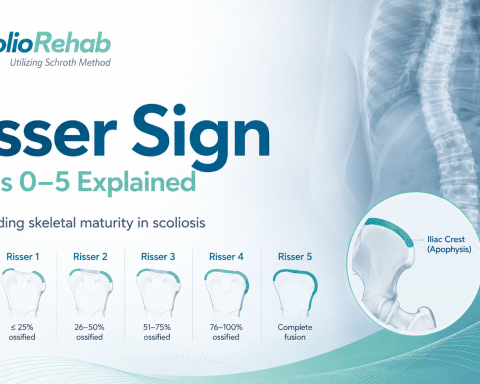
Some mild curves may only need observation, especially if the person has stopped growing and the curve is stable. Other cases may need closer monitoring, particularly in children and teenagers who are still growing.
The level of concern usually depends on several factors:
- Age
- Growth stage
- Curve size
- Curve pattern
- Whether the curve is progressing
- Postural changes
- Symptoms, if present
This is why two people with scoliosis may receive different recommendations even if their posture looks similar from the outside.
For example, a teenager with a moderate curve who is still growing may need closer monitoring than an adult with a similar curve that has remained stable for years.
Why Early Detection Matters
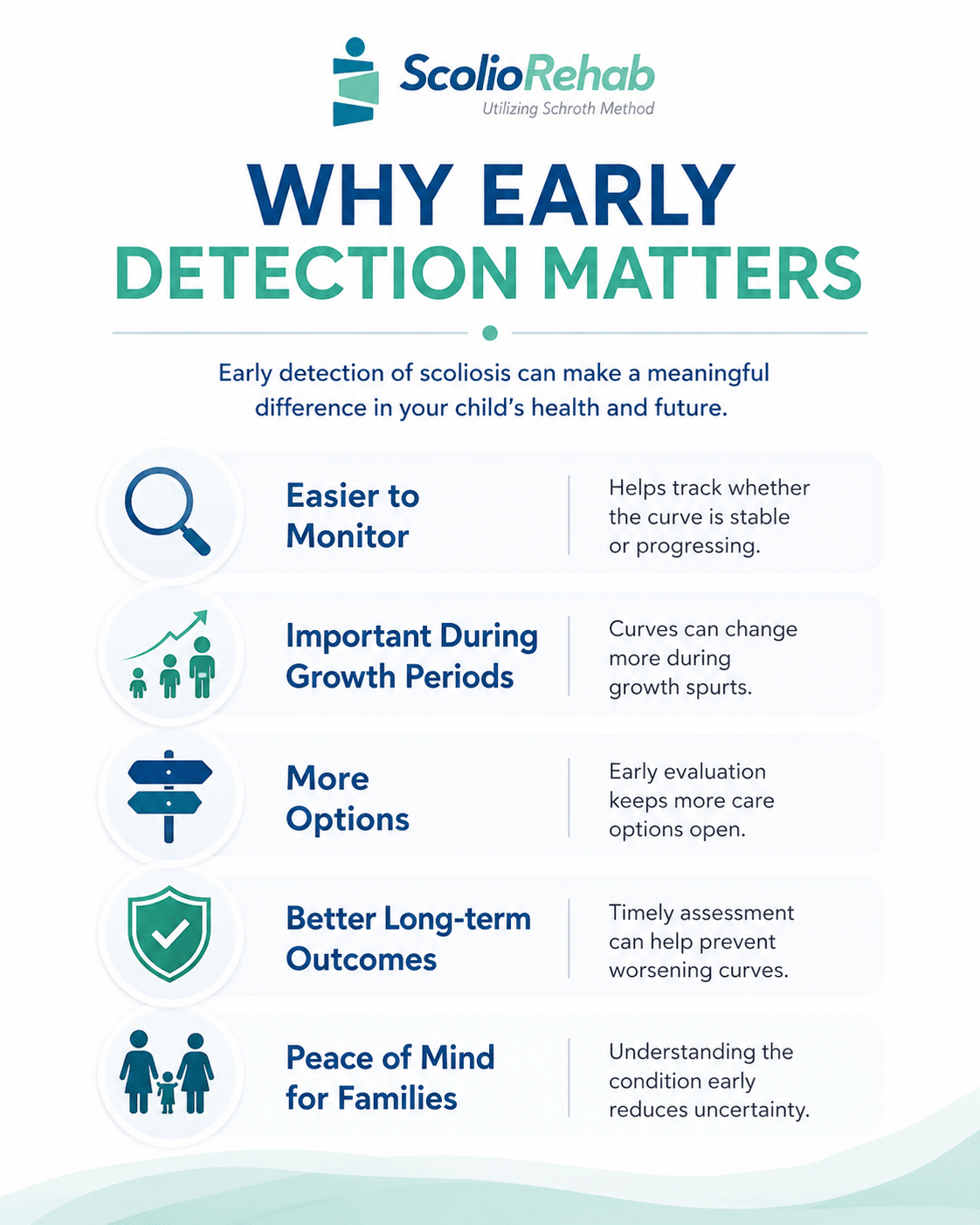
Early detection gives patients and families a clearer understanding of what is happening with the spine.
When scoliosis is found early, it becomes easier to monitor whether the curve is stable or progressing. This is especially important during the teenage years, when growth spurts can cause spinal curves to change more quickly.
Early evaluation does not always mean active treatment is needed immediately. In some cases, regular monitoring may be enough. However, without proper assessment, it is difficult to know whether the curve is mild, stable, or at risk of getting worse.
For patients who have already been diagnosed and want to understand the possible next steps, our page on scoliosis treatment in Malaysia explains the available care options in more detail.
Waiting until the curve becomes very obvious may reduce the available options and make management more difficult. That is why visible posture changes should be checked early, even when there is no pain.
When Should You Get Checked?
It may be worth getting checked if you notice:
- Uneven shoulders
- Uneven hips
- A visible curve in the back
- One side of the ribs appearing more prominent
- The body leaning to one side
- Back asymmetry when bending forward
- Postural changes during teenage years
- A family history of scoliosis
Parents should pay attention during growth spurts, especially if a child’s posture starts changing within a short period of time.
Adults should also consider assessment if they notice worsening posture, repeated back discomfort, or changes in body balance that were not present before.
Can People With Scoliosis Still Live Normally?
Yes, many people with scoliosis continue to live active and normal lives.
The impact of scoliosis varies from person to person. Some may have mild curves with very few symptoms. Others may experience posture imbalance, stiffness, discomfort, or reduced confidence because of visible body changes.
The most important step is understanding the condition properly. Once the curve pattern and severity are known, patients can make better decisions about monitoring and care.
Scoliosis should not be treated with fear, but it should also not be ignored. The goal is to understand the condition clearly and take the right next step based on the individual situation.
Final Thoughts
Scoliosis is a sideways curvature of the spine that can affect posture, body balance, and in some cases, daily comfort. It may appear during childhood, teenage years, or adulthood, and its severity can vary widely.
Some cases remain mild and stable. Others may progress, especially during growth periods. Because of this, early assessment is important when signs of scoliosis are noticed.
If you or your child shows visible posture changes, a proper evaluation can help determine whether the condition only needs monitoring or requires further care.
Sources
- Mayo Clinic — Scoliosis: Symptoms and Causes
Mayo Clinic explains scoliosis as a side-to-side curve of the spine, commonly diagnosed after age 10 or during the early teen years. - American Academy of Orthopaedic Surgeons — Introduction to Scoliosis
AAOS provides patient-friendly information about scoliosis in children and adolescents, including causes, screening, and diagnosis. - NIAMS — Scoliosis Symptoms and Causes
NIAMS explains scoliosis as an abnormal S-shaped or C-shaped curve of the spine and lists common signs such as uneven shoulders, uneven hips, and rib cage imbalance.