 Angie Lee
If you have scoliosis, bedtime can sometimes feel harder than the day itself.
Some people notice discomfort when lying flat. Others wake up feeling stiff, sore, or unsure whether sleeping posture is making their scoliosis worse.
One of the most common questions we hear is:
“Is there a best sleeping position for scoliosis?”
The short answer: there is no single sleeping position that works for everyone with scoliosis. However, certain sleeping positions may help improve comfort, reduce pressure on sensitive areas, and support a more restful night.
In this guide, we’ll explain which sleeping positions tend to work best, which habits may increase discomfort, and simple adjustments that can make sleeping easier for people with scoliosis.
Can Sleeping Position Affect Scoliosis?
Sleeping position does not cause scoliosis and usually does not change the curve itself.
However, sleeping posture can affect:
- Muscle tension
- Pressure distribution
- Joint comfort
- Breathing comfort
- Sleep quality
- Morning stiffness
People with scoliosis may experience uneven loading across the back, ribs, shoulders, or pelvis. Because of this, a sleeping position that feels comfortable for one person may feel uncomfortable for another.
The goal is not to “straighten” the spine overnight.
The goal is to sleep in a position that allows the body to rest with less unnecessary strain.
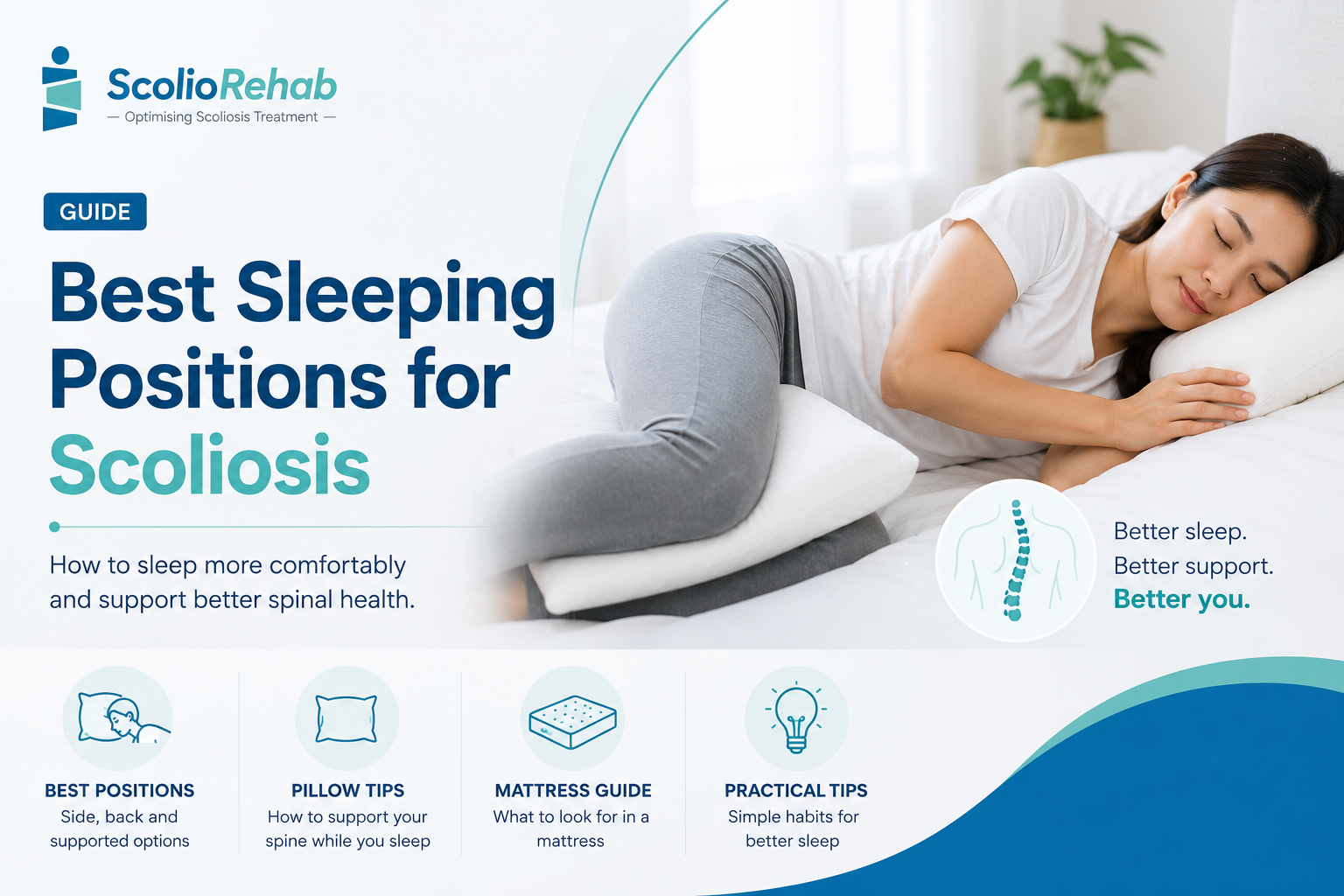
1. Side Sleeping (Often the Most Comfortable Choice)
For many people with scoliosis, side sleeping is often the easiest and most comfortable position.
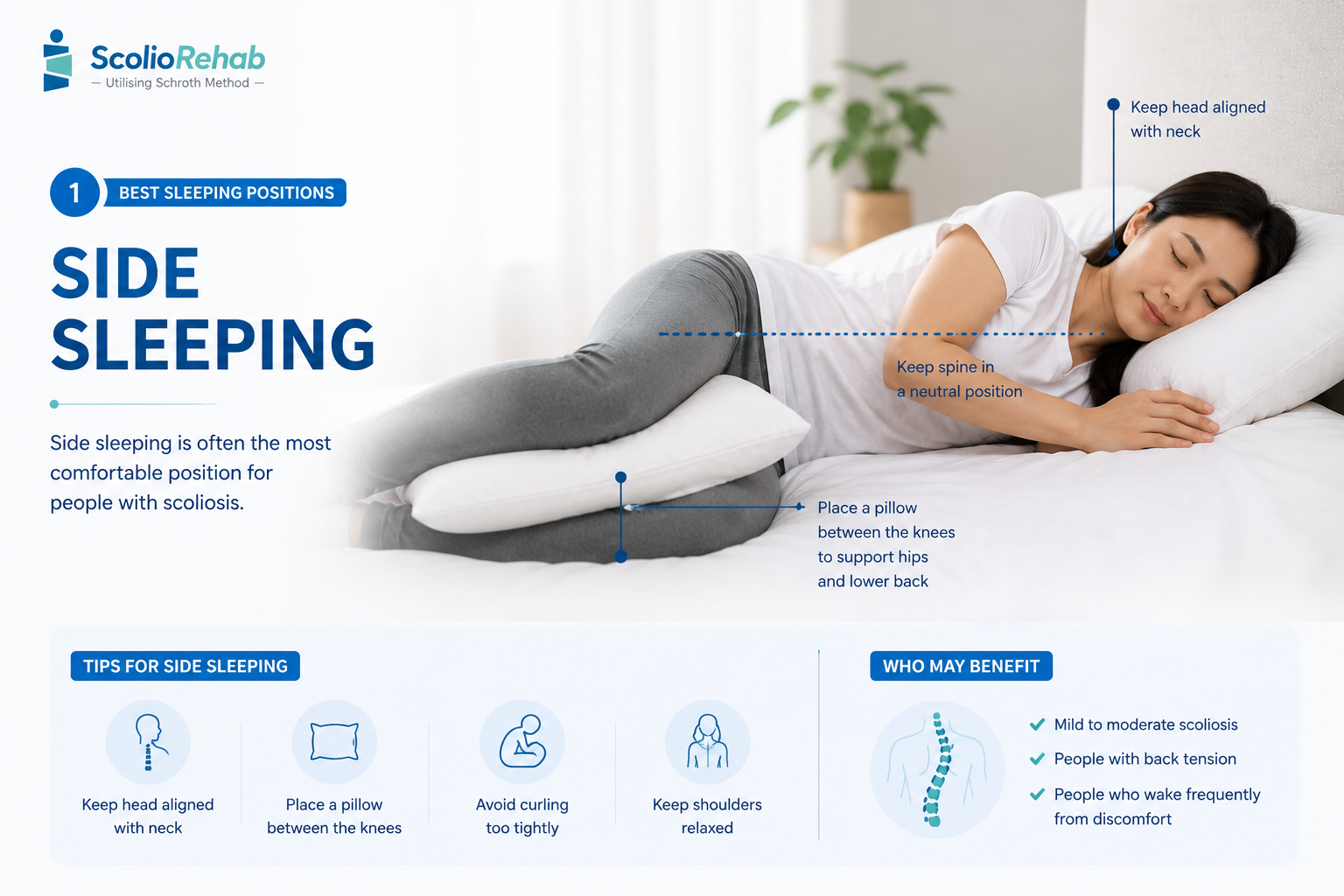
Why it may help:
- Reduces direct pressure on the spine
- Can feel more natural for spinal curves
- Easier to support with pillows
- May reduce morning stiffness
Tips for side sleeping with scoliosis:
✓ Keep head aligned with neck
✓ Place a pillow between the knees
✓ Avoid curling too tightly into a ball
✓ Keep shoulders relaxed
Adding a pillow between the knees may help maintain a more balanced position through the hips and lower back.
Who may benefit:
- Mild to moderate scoliosis
- People with back tension
- People who wake frequently from discomfort
2. Sleeping on the Back (Good for Balanced Support)
Back sleeping can work well because body weight is distributed more evenly.
Some people with scoliosis feel more supported when lying on their back rather than one side.
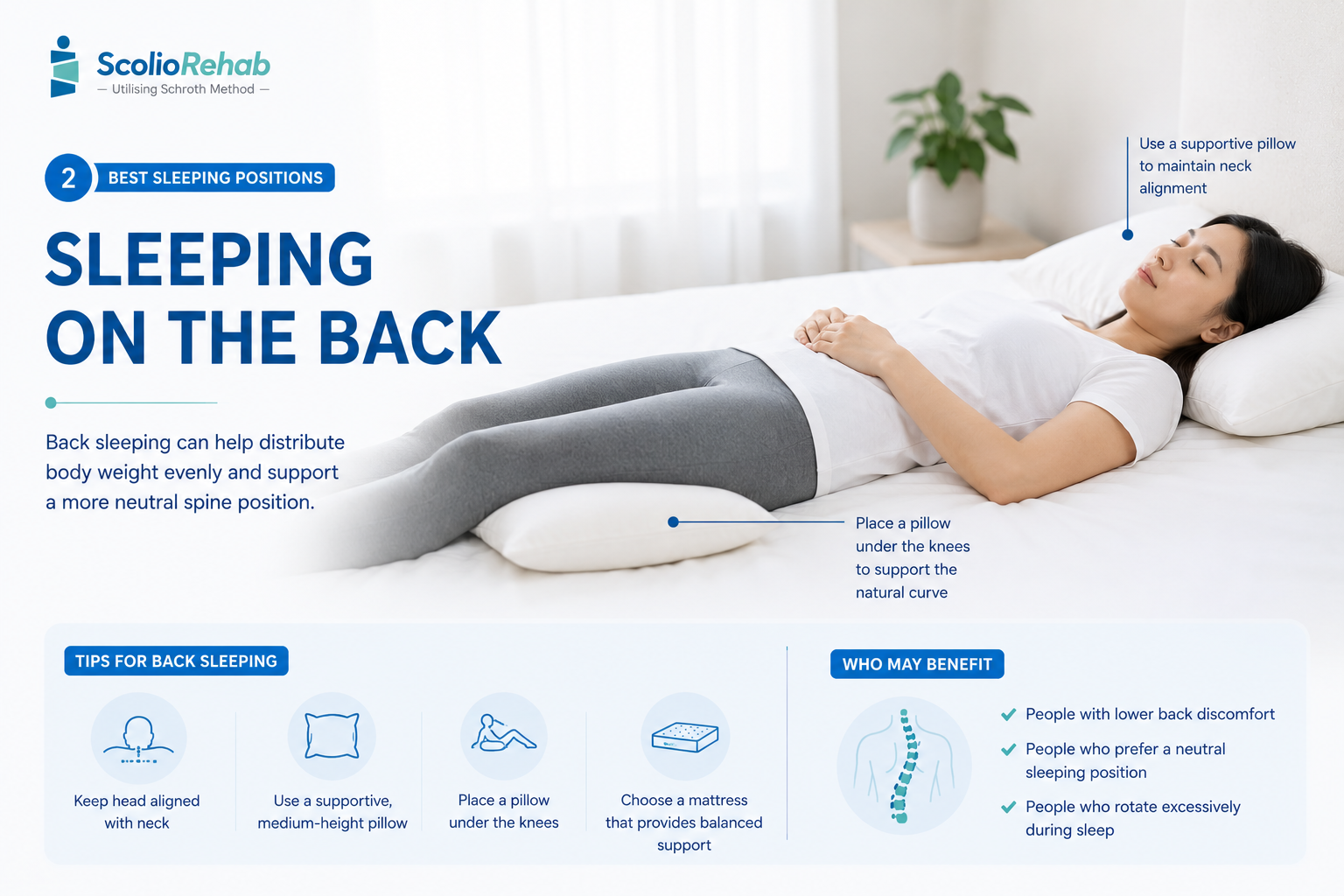
Benefits:
- Neutral body position
- Less twisting
- Easier spinal support
To improve comfort:
- Place a small pillow under the knees
- Use a supportive pillow for the neck
- Avoid very thick pillows
If lying flat causes discomfort, slight elevation may help.
Who may benefit:
- People with lower back discomfort
- People who rotate excessively during sleep
3. Semi-Reclined Position (Helpful for Certain Individuals)
Some individuals feel better sleeping with the upper body slightly elevated.
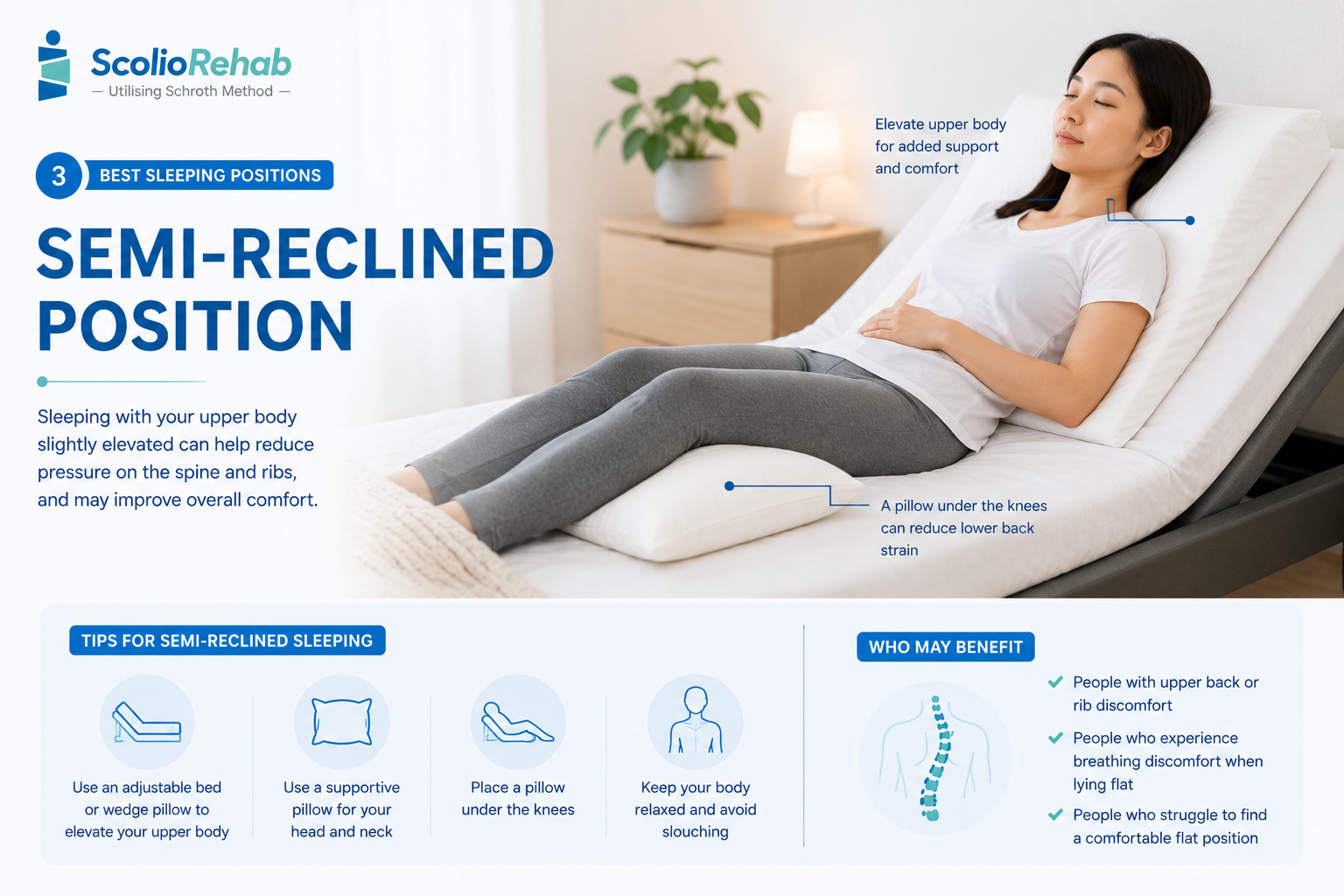
Examples:
- Adjustable bed
- Wedge pillow
- Slight incline
This may feel helpful for people who experience:
- Rib discomfort
- Upper back pressure
- Difficulty finding a neutral position
The goal should remain comfort—not forcing posture correction.
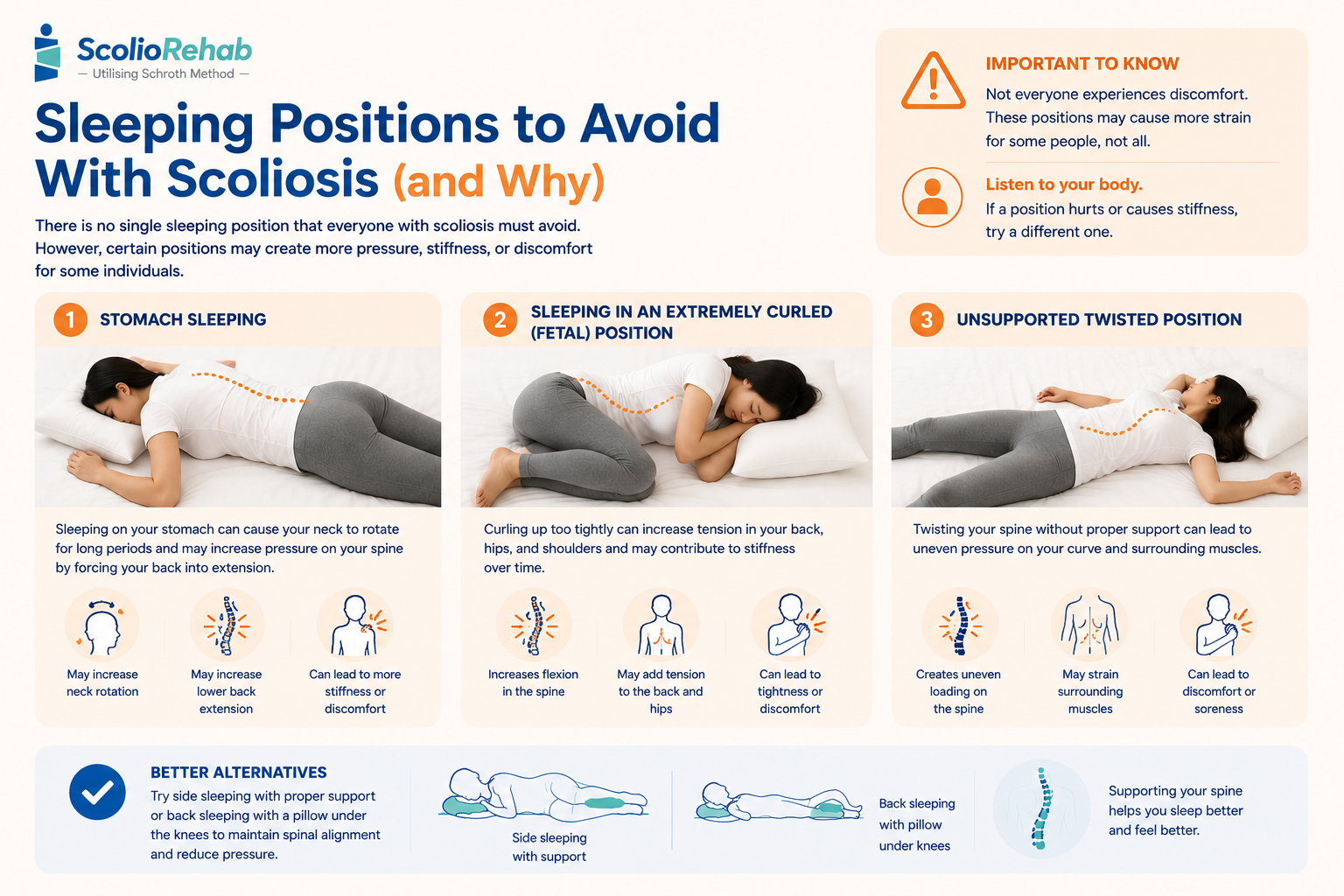
Sleeping Positions To Avoid With Scoliosis
Many people with scoliosis ask:
“Is there any sleeping position I should avoid?”
The answer is not completely black and white.
There is no single sleeping position that everyone with scoliosis must avoid. Sleeping position does not cause scoliosis and usually does not change the curve itself.
However, certain positions may place more pressure on the neck, back, ribs, or surrounding muscles and may feel less comfortable for some individuals.
If you regularly wake up with stiffness, soreness, or feel more uncomfortable after sleeping, your sleeping posture may be worth reviewing.
1. Stomach Sleeping
Sleeping on your stomach is one of the positions that some people with scoliosis find less comfortable.
When lying face down, the neck often remains rotated to one side for long periods. At the same time, the lower back may naturally extend more than usual.
For some people, this may contribute to:
- Neck stiffness
- Increased pressure through the lower back
- Morning discomfort
- Difficulty maintaining a relaxed sleeping posture
This does not mean stomach sleeping is “wrong.”
But if you notice that symptoms feel worse after sleeping this way, trying another position may be helpful.
2. Sleeping in an Extremely Curled (Fetal) Position
Side sleeping is often comfortable for people with scoliosis—but there is a difference between relaxed side sleeping and curling tightly into a ball.
Sleeping in a very curled position for extended periods may increase tension around:
- Lower back
- Hips
- Shoulders
- Surrounding muscles
Instead of pulling the knees tightly toward the chest, try a more relaxed side position with a pillow between the knees.
The goal is support—not forcing posture.
3. Unsupported Twisted Position
Some people naturally rotate their body while sleeping.
Occasional movement during sleep is completely normal.
However, sleeping with excessive twisting and without support may sometimes create uneven pressure across certain areas of the body.
Examples include:
- One shoulder rolled excessively forward
- Pelvis rotating heavily in one direction
- Upper body twisted while hips remain flat
If you frequently wake feeling uneven, stiff, or uncomfortable, adding small supports such as pillows may improve comfort.
Does Scoliosis Change Which Side You Should Sleep On?
There is no universal rule that says people with scoliosis must sleep on a specific side.
Curve pattern, comfort, symptoms, and body shape all influence preference.
Instead of asking:
“Which side is correct?”
Ask:
“Which position allows me to wake with less discomfort?”
This often leads to a more useful answer.
Does Mattress Matter for Scoliosis?
Mattress discussions can become confusing.
A mattress cannot correct scoliosis.
But it can influence comfort.
General principles:
- Avoid mattresses that collapse excessively
- Avoid extremely rigid surfaces if uncomfortable
- Aim for support without pressure
Many people prefer medium to medium-firm support.
The best mattress is often the one that helps maintain comfort throughout the night.
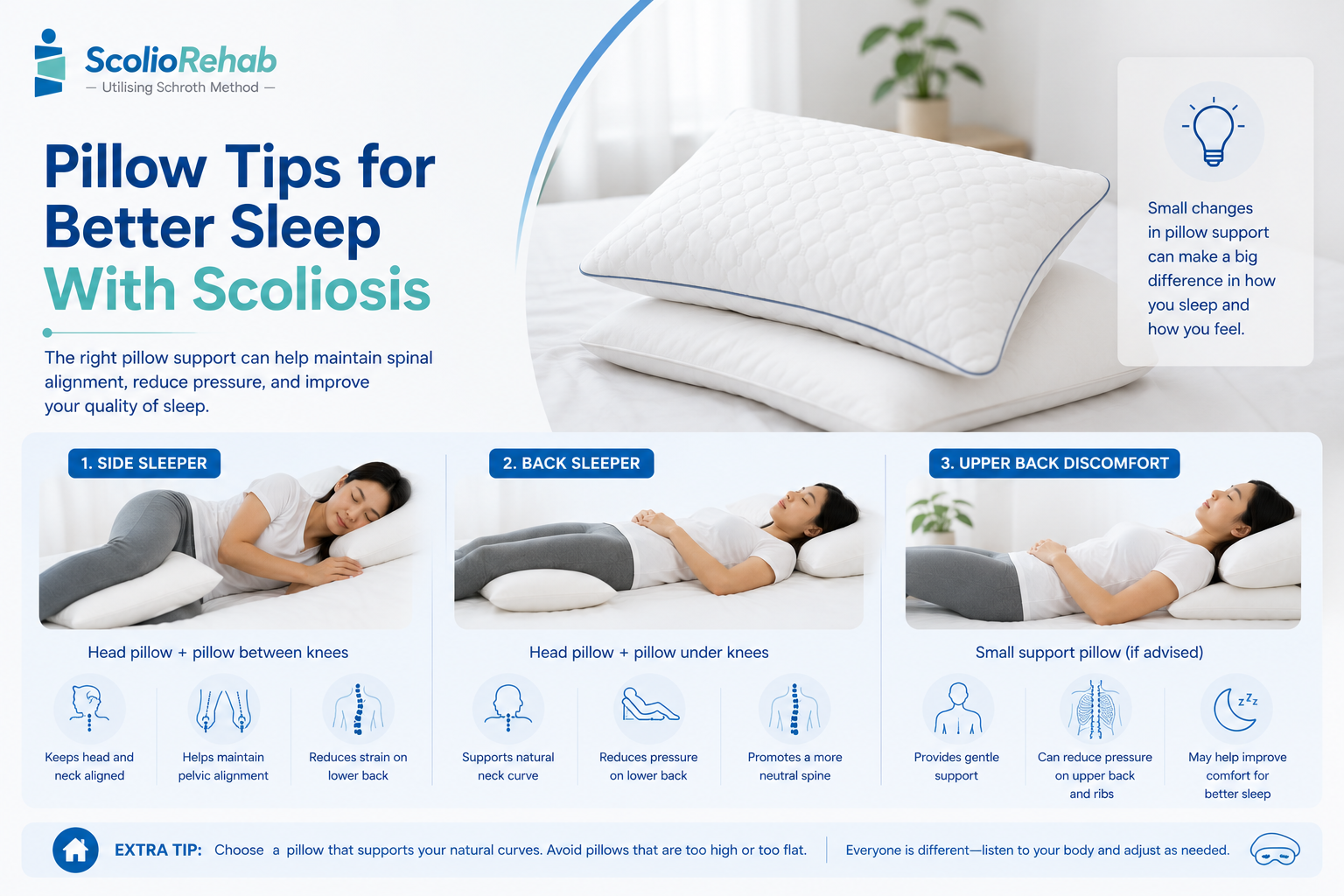
Pillow Tips for Better Sleep With Scoliosis
Small changes can make a noticeable difference.
Try:
Side sleeper
Head pillow + pillow between knees
Back sleeper
Head pillow + pillow under knees
Upper back discomfort
Small support pillow if advised by healthcare provider
Sleeping With Scoliosis in Children and Teenagers
Children and adolescents often ask whether sleeping position can stop scoliosis progression.
Current understanding suggests that sleeping posture alone does not control curve progression.
More important factors include:
- Monitoring
- Exercise programs
- Clinical assessment
- Appropriate treatment when necessary
Sleep remains important because good recovery supports overall wellbeing.
When Sleep Discomfort May Be a Sign to Seek Assessment
Occasional discomfort is common.
Consider seeking professional assessment if:
- Pain regularly interrupts sleep
- Morning stiffness becomes frequent
- Sleep quality is declining
- Daily activities are affected
- Symptoms continue despite adjustments
Sleeping position is one piece of the picture.
Understanding how posture, movement, and spinal mechanics work together often gives a clearer direction.
Final Thoughts
Finding the best sleeping position for scoliosis is less about finding one perfect posture and more about finding what allows your body to rest comfortably.
For many people, side sleeping with proper support or back sleeping with simple adjustments can improve comfort.
If sleep discomfort becomes persistent, an assessment may help identify whether posture, muscle imbalance, or other factors are contributing.
Small changes in positioning can sometimes make nights feel noticeably easier—and better sleep supports better days.
Frequently Asked Questions
Can sleeping position worsen scoliosis?
Sleeping position does not typically worsen scoliosis, but it may affect comfort and sleep quality.
Is side sleeping better for scoliosis?
Many people find side sleeping comfortable, especially with pillow support.
Is a firm mattress better for scoliosis?
Not always. Comfort and support are usually more important than firmness alone.
Can scoliosis be corrected while sleeping?
Sleeping posture alone does not correct scoliosis.