 Angie Lee
Scoliosis, kyphosis and lordosis are three terms used to describe different types of spinal curves. They may sound similar, but they do not mean the same thing.
The easiest way to understand the difference is this:
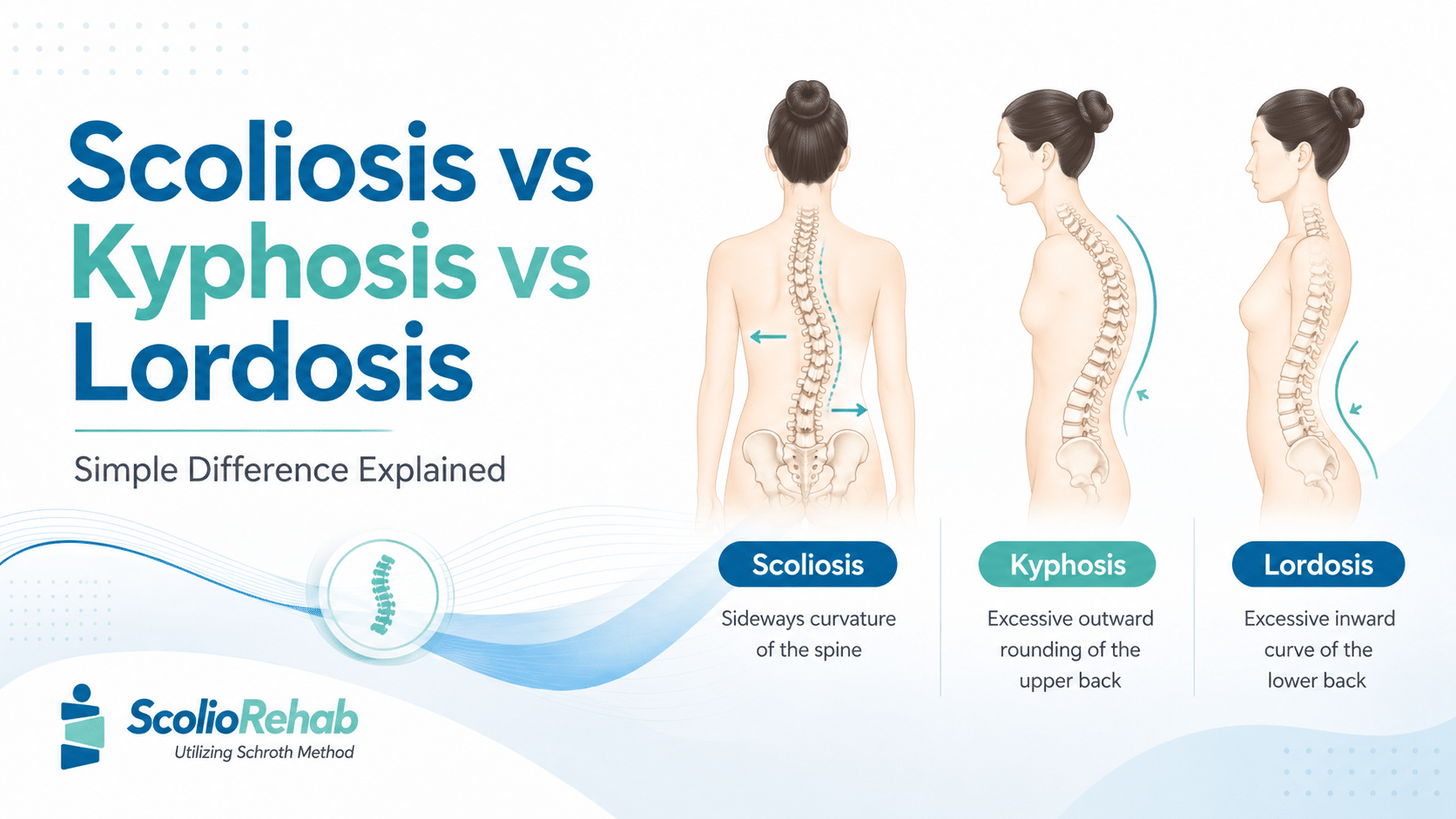
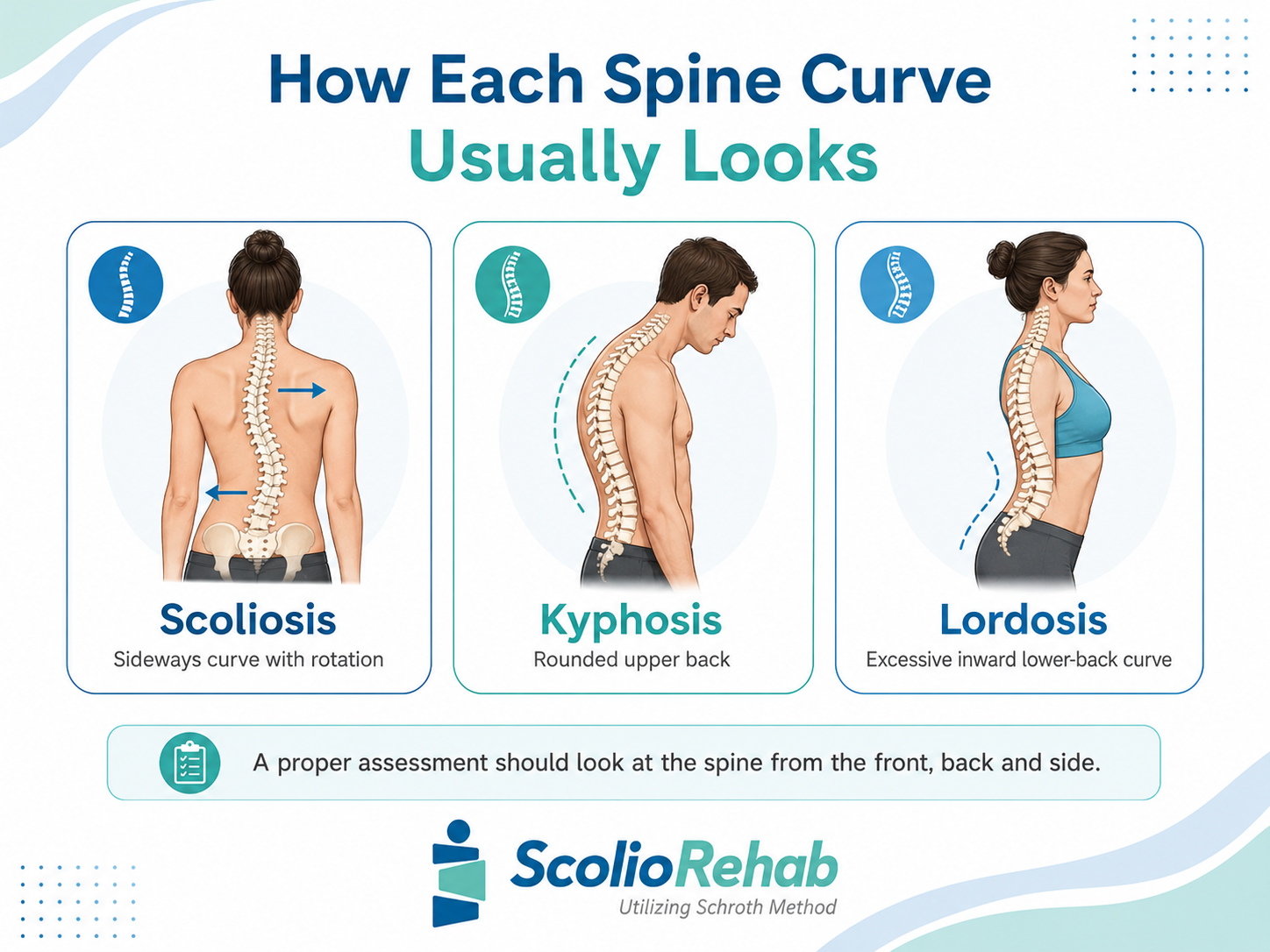
Scoliosis curves sideways. Kyphosis rounds the upper back. Lordosis arches the lower back or neck inward.
All three are related to spinal alignment, but each one affects posture in a different direction. This is why the right treatment depends on the type of curve, the severity, the symptoms and whether the curve is flexible or structural.
Quick Answer: What’s the Difference?
| Spine Curve | Simple Meaning | How It Usually Looks |
|---|---|---|
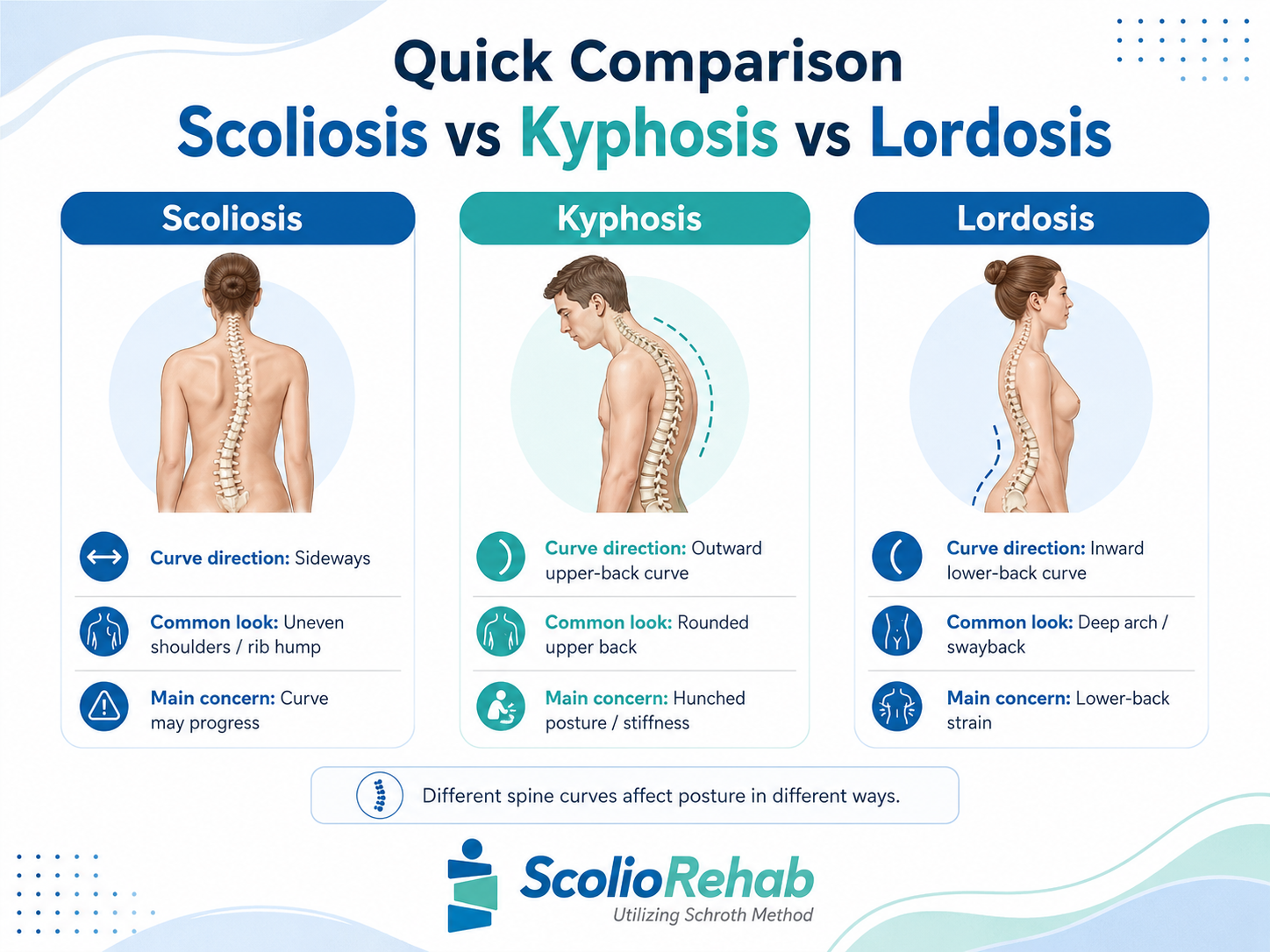
| Scoliosis | A sideways spinal curve that may also involve rotation | Uneven shoulders, uneven waist, rib hump, body leaning to one side |
| Kyphosis | An excessive outward curve of the upper back | Rounded upper back, hunched posture, forward shoulders |
| Lordosis | An excessive inward curve of the lower back or neck | Deep lower back arch, pelvis tilted forward, swayback posture |
A normal spine is not completely straight from the side. The neck and lower back naturally curve inward, while the upper back naturally curves outward. These natural curves help the body stand upright and stay balanced.
The issue starts when one of these curves becomes excessive, painful, progressive or affects daily movement.
The Main Difference Is the Curve Direction
The fastest way to compare scoliosis, kyphosis and lordosis is by looking at the direction of the curve.
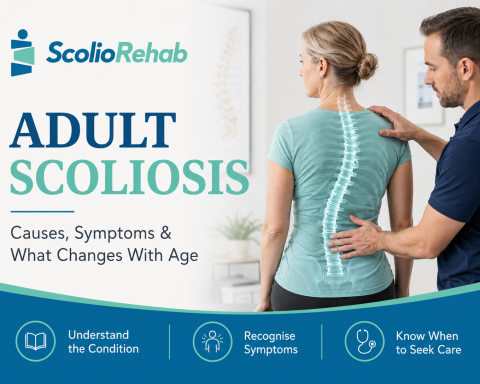
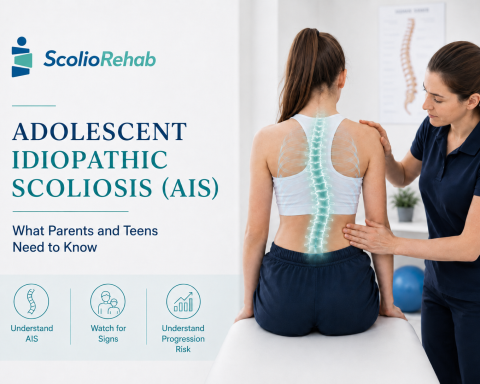
Scoliosis is mainly seen from the front or back view. The spine curves sideways and may rotate. It is a side-to-side curve of the spine that is often diagnosed after age 10 or in the early teen years.
Kyphosis is mainly seen from the side view. The upper back rounds outward more than normal, which can make a person look hunched or slouched. It is an outward spinal curve that is greater than it should be, often affecting the upper back.
Lordosis is also seen from the side view. It refers to an increased inward curve, usually in the lower back or neck. Lordosis is an increase in the curve toward the front of the body and is naturally found in the cervical and lumbar spine.
Simple memory trick:
Scoliosis = sideways
Kyphosis = rounded upper back
Lordosis = arched lower back
How Each Spine Curve Usually Looks
You do not need to memorize medical terms. The appearance is usually easier to understand.
Scoliosis Appearance
Scoliosis may show up as:
- One shoulder higher than the other
- Uneven waist or hips
- One shoulder blade sticking out more
- Rib hump when bending forward
- Body leaning to one side
- Clothes fitting unevenly
Kyphosis Appearance
Kyphosis may show up as:
- Rounded upper back
- Hunched posture
- Forward head position
- Shoulders rolling forward
- Upper back stiffness
- Difficulty standing tall for long periods
Some kyphosis is posture-related. Some cases are more structural and need proper assessment.
Lordosis Appearance
Lordosis may show up as:
- Deep arch in the lower back
- Pelvis tilting forward
- Abdomen appearing pushed forward
- Buttocks appearing more prominent
- Lower back tightness
- Lower back discomfort
A lower back curve is normal. The concern is when the inward curve becomes excessive, painful or difficult to control.
Can Someone Have More Than One Spine Curve?
Yes. A person can have more than one spinal curve pattern at the same time.
For example, someone may have scoliosis together with increased kyphosis or increased lordosis. Some posture changes may also happen because the body is trying to compensate for another curve.
This is why looking at posture from only one angle is not enough. A proper spine assessment should check the body from the front, back and side.
Which One Should You Be More Concerned About?
There is no simple answer because severity matters more than the name.
A mild curve may not cause major problems. A more severe or progressive curve may affect posture, movement, pain, confidence or daily function.
You should pay more attention if the curve is:
- Getting worse over time
- Causing pain
- Affecting walking, sitting, standing or breathing
- Creating visible body imbalance
- Happening during a child or teenager’s growth years
- Linked with weakness, numbness or other unusual symptoms
Do not panic just because you notice a curve. But do not ignore visible changes either, especially in children and teenagers.
When Should You Get a Spine Assessment?
You should consider getting assessed if you notice:
- Uneven shoulders
- Uneven waist or hips
- Rib hump
- Body leaning to one side
- Rounded upper back getting worse
- Deep lower back arch with pain
- Back pain that keeps returning
- Posture changes during growth years
- Clothes fitting unevenly
- Difficulty standing upright
For children and teenagers, early assessment is especially important because some spinal curves can progress during growth. Some scoliosis curves can worsen as children grow, and severe curves may affect breathing by pushing on the lungs.
Are the Treatments the Same?
Not exactly.
Some treatment methods may overlap, such as posture correction, strengthening, mobility work and pain management. But the treatment plan should still depend on the type of curve.
For example:
| Condition | Treatment Focus |
|---|---|
| Scoliosis | Scoliosis-specific exercises, curve pattern correction, posture training, strengthening, bracing support when suitable |
| Kyphosis | Upper back mobility, back extensor strengthening, posture retraining, shoulder and chest mobility |
| Lordosis | Core strengthening, glute strengthening, hip flexor mobility, pelvic control and posture retraining |
This is where generic advice becomes weak. “Just sit straight” is not a treatment plan. A proper plan should be based on assessment, not guesswork.
ScolioRehab’s Approach to Spine Curve Assessment
At ScolioRehab, the focus is on non-surgical scoliosis care and spine-related rehabilitation. For scoliosis patients, treatment may include Schroth-based exercises, posture correction, strengthening, pain management and Gensingen Brace support when suitable.
If you are unsure whether your posture change is scoliosis, kyphosis, lordosis or another spinal issue, a proper assessment can help you understand what is happening and what scoliosis treatment options may be appropriate.