 Angie Lee
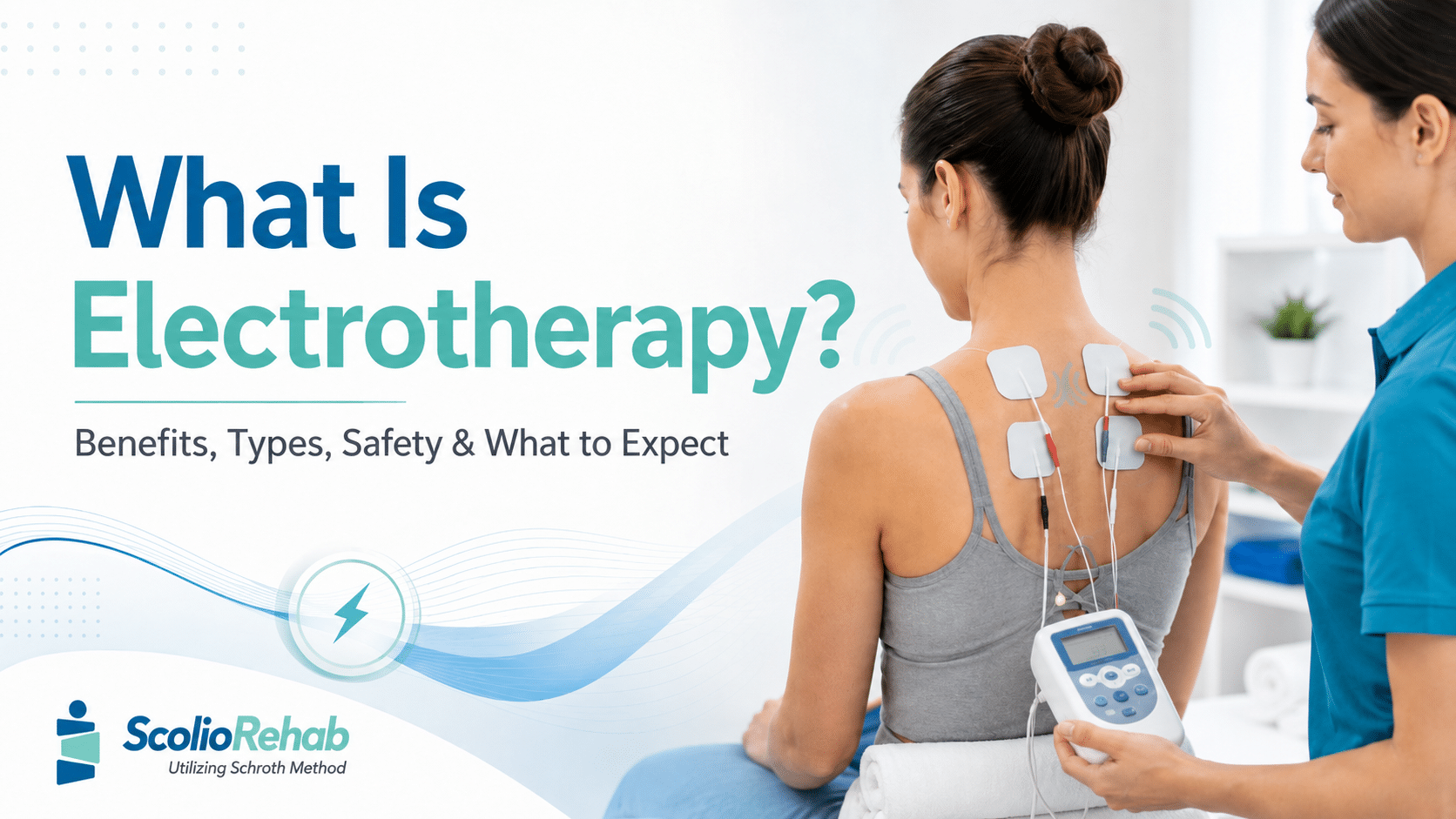
Electrotherapy is a physiotherapy treatment method that uses controlled electrical stimulation to support pain relief, muscle activation, and recovery. It is commonly used by physiotherapists for conditions involving muscle pain, joint discomfort, nerve-related pain, muscle weakness, stiffness, or movement problems.
Although the word “electrotherapy” may sound intimidating, the treatment is usually gentle and adjustable. Most patients describe the sensation as mild tingling, pulsing, tapping, or vibration on the skin. The intensity can be changed based on your comfort level and treatment goal.
However, electrotherapy is not a magic cure. It should not replace proper physiotherapy assessment, movement correction, strengthening, posture training, or rehabilitation exercises. In many cases, electrotherapy works best as part of a broader physiotherapy plan.
What Is Electrotherapy?
Electrotherapy refers to a group of physiotherapy treatments that use electrical energy to stimulate nerves, muscles, or soft tissues. Small electrode pads are usually placed on the skin near the affected area. These pads deliver controlled electrical impulses through the skin.
Depending on the type of electrotherapy used, the goal may be to:
- Help reduce pain
- Support muscle activation
- Improve muscle control
- Reduce muscle tightness
- Support circulation in the treated area
- Assist recovery after injury
- Help patients tolerate exercise or movement better
Electrotherapy is commonly used in physiotherapy clinics for musculoskeletal conditions such as back pain, neck pain, shoulder pain, knee pain, muscle strain, joint stiffness, and posture-related discomfort.
How Does Electrotherapy Work?
Electrotherapy works by sending controlled electrical signals through the skin to influence nerves, muscles, or surrounding tissues.
For pain relief, some forms of electrotherapy may help reduce pain signals traveling to the brain. This can make discomfort feel more manageable during or after treatment. Some stimulation methods may also encourage the body’s natural pain-relieving response.
For muscle activation, electrotherapy can stimulate muscle contractions. This may be useful when a muscle is weak, underactive, difficult to control, or recovering after injury.
For rehabilitation, electrotherapy may be used to help patients move with less discomfort, activate the right muscles, or prepare the body for exercise-based treatment.
The exact effect depends on the type of electrotherapy, machine setting, electrode placement, patient condition, and treatment goal.
Common Types of Electrotherapy Used in Physiotherapy
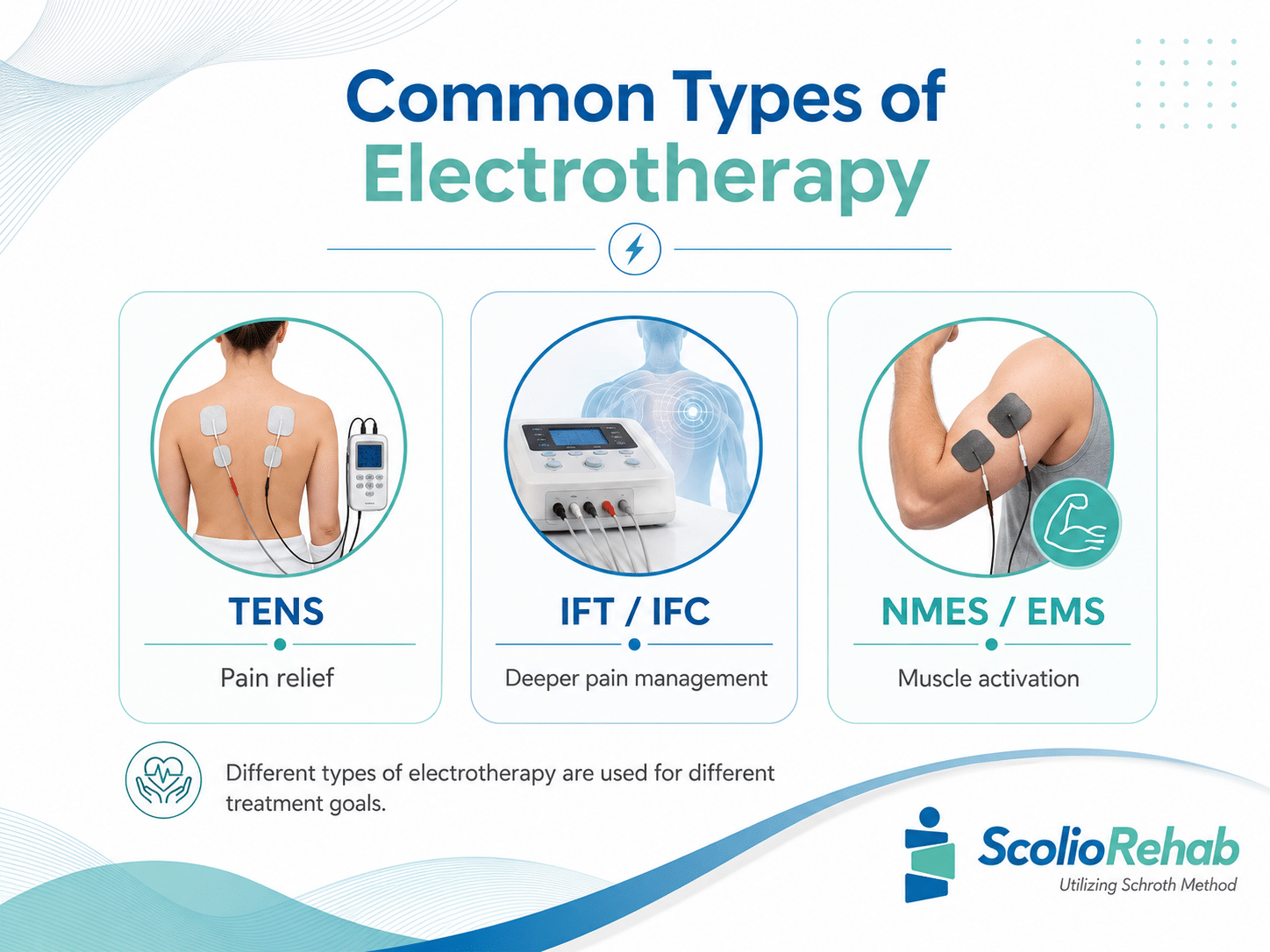
There are different types of electrotherapy. Your physiotherapist will choose the most suitable option based on your symptoms, assessment findings, and treatment objective.
1. TENS
TENS stands for Transcutaneous Electrical Nerve Stimulation.
It is one of the most common types of electrotherapy used for pain relief. TENS uses mild electrical impulses delivered through electrode pads placed on the skin. The aim is to help reduce pain signals and make discomfort more manageable.
TENS may be used for conditions such as:
- Back pain
- Neck pain
- Joint pain
- Muscle pain
- Nerve-related pain
- Chronic pain
- Post-injury discomfort
TENS does not work for everyone. It may help some patients feel temporary pain relief, but it should not be viewed as a standalone solution for long-term recovery.
2. Interferential Therapy
Interferential therapy, often called IFT or IFC, uses electrical currents that pass through the tissues to help manage pain and discomfort.
It is commonly used in physiotherapy for deeper areas of pain compared to some other surface-level stimulation methods. Patients may feel a comfortable tingling or pulsing sensation during treatment.
IFT may be used for:
- Lower back pain
- Neck and shoulder pain
- Joint pain
- Muscle tightness
- Soft tissue injury
- Pain after strain or sprain
Like other forms of electrotherapy, IFT should be used based on proper assessment. It should support the rehab process, not replace it.
3. NMES
NMES stands for Neuromuscular Electrical Stimulation.
Unlike TENS, which is mainly used for pain relief, NMES is often used to stimulate muscle contraction. This can help activate muscles that are weak, inhibited, or not firing properly.
NMES may be used for:
- Muscle weakness
- Muscle re-education
- Post-injury rehabilitation
- Post-surgical rehabilitation
- Poor muscle activation
- Movement control problems
For example, after injury or long periods of reduced activity, some muscles may become weaker or harder to activate. NMES may help stimulate the muscle while the patient also works on strengthening and movement retraining.
4. EMS
EMS stands for Electrical Muscle Stimulation.
It is sometimes used interchangeably with NMES, although the exact usage may depend on the device and clinical setting. In physiotherapy, muscle stimulation is usually used with a clear rehab goal, such as improving muscle activation or supporting strengthening.
This is different from using electrical stimulation casually without assessment. In a clinic setting, the physiotherapist should understand which muscle needs stimulation, why it is needed, and how it fits into the overall treatment plan.
5. Therapeutic Ultrasound
Therapeutic ultrasound is sometimes grouped under electrotherapy, although it uses sound waves instead of electrical current.
It may be used in some physiotherapy settings to support soft tissue healing, reduce discomfort, or assist recovery. However, it should only be included if the clinic actually provides this treatment.
For ScolioRehab, only mention therapeutic ultrasound if it is available as part of the clinic’s treatment options.
What Conditions May Electrotherapy Help With?
Electrotherapy may be used for different musculoskeletal and pain-related conditions. It is often recommended as part of physiotherapy treatment for:
- Back pain
- Neck pain
- Shoulder pain
- Knee pain
- Muscle strain
- Ligament sprain
- Joint stiffness
- Sports injury
- Posture-related pain
- Muscle tightness
- Muscle weakness
- Nerve-related pain
- Chronic pain conditions
- Post-injury recovery
- Post-surgical rehabilitation
For patients with scoliosis, electrotherapy may sometimes be used to help manage pain, muscle tightness, or discomfort. However, electrotherapy does not correct spinal curvature. Scoliosis management usually requires a more complete approach that may include assessment, posture training, scoliosis-specific exercise, strengthening, bracing advice where appropriate, and ongoing progress monitoring.
Benefits of Electrotherapy in Physiotherapy
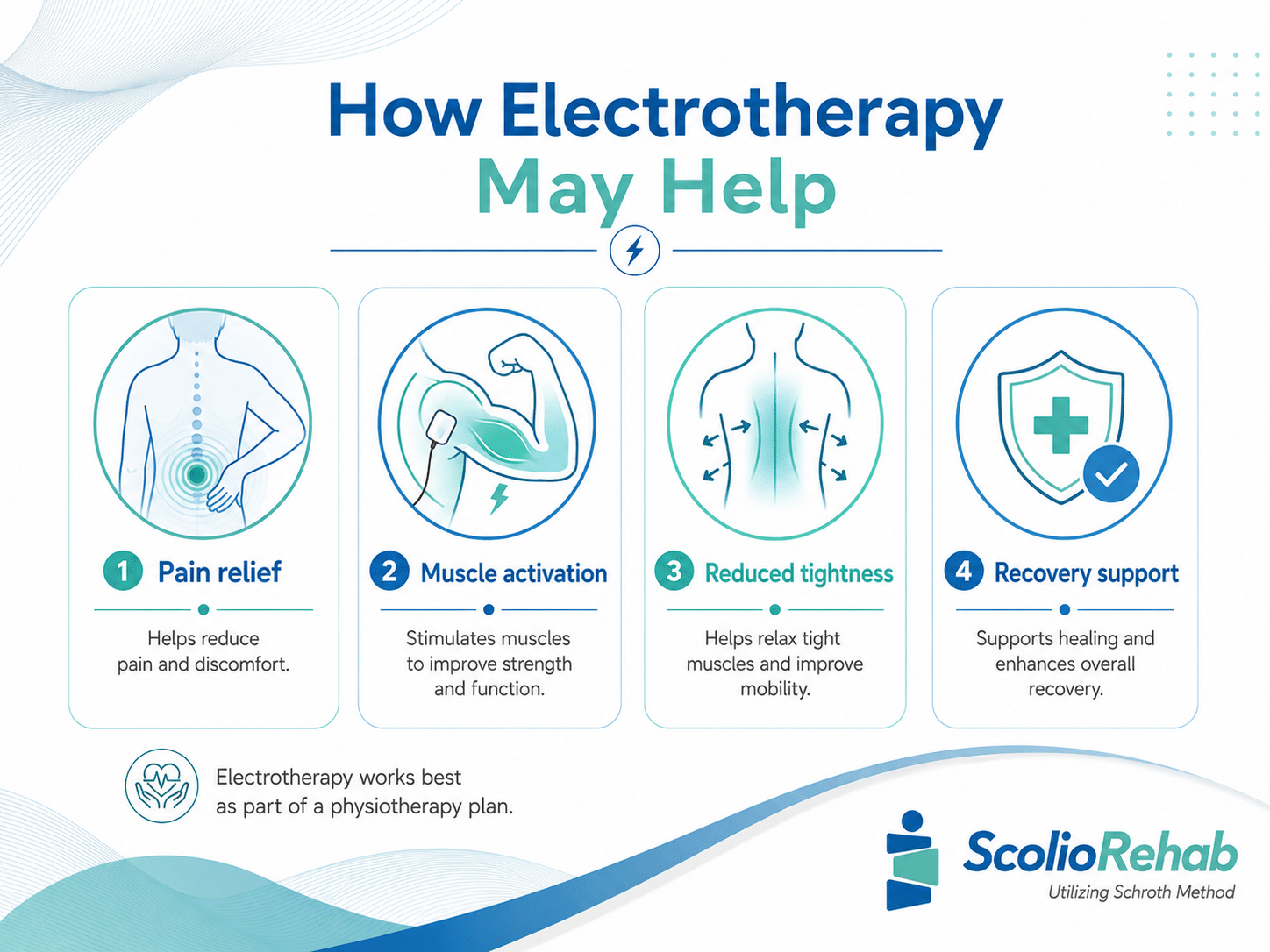
Electrotherapy may offer several benefits when used correctly as part of a physiotherapy plan.
1. May Help Reduce Pain
One of the most common uses of electrotherapy is pain management. For some patients, electrical stimulation may help reduce pain intensity during or shortly after treatment.
This can be useful when pain is limiting movement, exercise, sleep, work, or daily activities.
2. May Help Relax Tight Muscles
Muscle tightness can happen due to poor posture, overuse, injury, pain guarding, or long periods of sitting. Electrotherapy may help reduce discomfort and relax the treated area, especially when combined with stretching, manual therapy, strengthening, or movement correction.
3. May Support Muscle Activation
Some patients struggle to activate certain muscles properly. This can happen after injury, surgery, pain, weakness, or poor movement habits.
NMES or EMS may help stimulate muscle contraction and improve awareness of the target muscle. This is usually more effective when combined with active exercise.
4. May Help Patients Move More Comfortably
Pain can make people avoid movement. Over time, this can lead to stiffness, weakness, and poorer function.
Electrotherapy may help reduce discomfort enough for the patient to participate better in physiotherapy exercises, mobility work, or strengthening.
5. May Support Recovery as Part of a Rehab Plan
Electrotherapy may be useful during certain stages of recovery, especially when pain or muscle weakness makes exercise difficult. However, the long-term goal should usually be to restore movement, strength, function, and confidence.
What Does Electrotherapy Feel Like?
Most patients feel a mild tingling, pulsing, tapping, or vibration sensation during electrotherapy. The feeling should be noticeable but comfortable.
Depending on the type of electrotherapy used, you may feel:
- Gentle tingling on the skin
- Rhythmic pulsing
- Muscle twitching
- Light tapping sensation
- Mild muscle contraction
- Warmth or relaxation after treatment
Electrotherapy should not feel painfully sharp, burning, or unbearable. If the sensation is uncomfortable, you should tell your physiotherapist immediately so the intensity or pad placement can be adjusted.
Is Electrotherapy Painful?
Electrotherapy should not be painful when applied properly.
Some patients may find the sensation unusual at first, especially if they have never experienced electrical stimulation before. However, the intensity is adjustable. Your physiotherapist should start at a comfortable level and increase it only when appropriate.
If you feel pain, burning, skin irritation, dizziness, or unusual discomfort during treatment, inform your physiotherapist straight away.
Is Electrotherapy Safe?
Electrotherapy is generally considered safe when used properly by a trained physiotherapist. However, it is not suitable for everyone.
Safety depends on:
- The patient’s medical history
- The type of electrotherapy used
- The area being treated
- Skin condition
- Device settings
- Electrode placement
- Whether the patient has implants or certain health conditions
This is why proper assessment matters. Electrotherapy should not be used randomly without understanding the patient’s condition.
Who Should Avoid Electrotherapy?
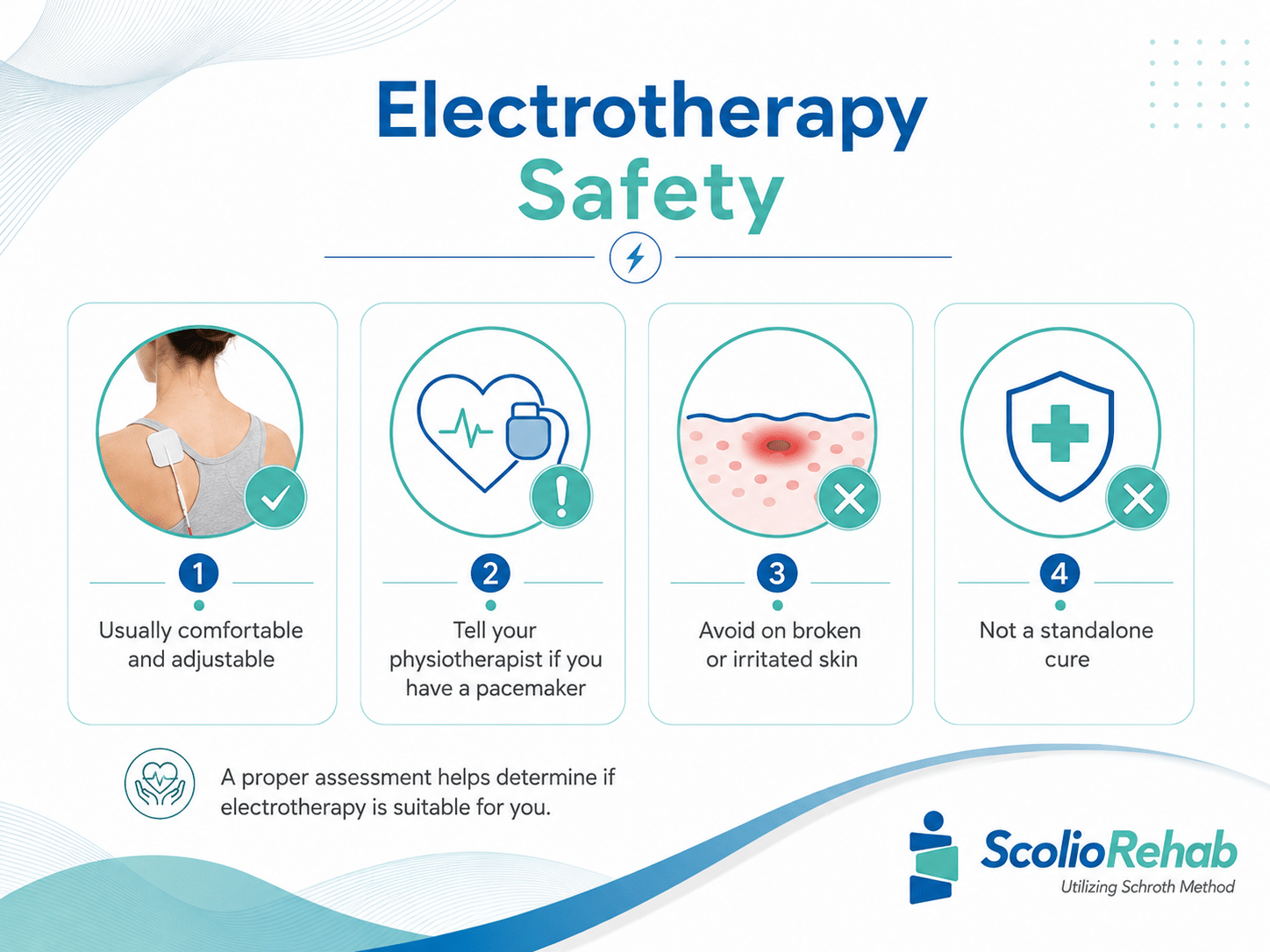
Electrotherapy may not be suitable for some people or some areas of the body. You should inform your physiotherapist if you have any medical conditions, implants, or concerns before treatment.
Electrotherapy may need to be avoided or modified if you have:
- A pacemaker or certain implanted electronic devices
- Certain heart conditions
- Epilepsy or seizure history
- Pregnancy, especially depending on the treatment area
- Active cancer in the treatment area, unless cleared by a doctor
- Broken, infected, or irritated skin
- Reduced sensation or numbness in the treatment area
- Recent radiation treatment in the area
- Deep vein thrombosis or serious circulation problems
- Unexplained pain that has not been assessed
Electrode pads should also not be placed over certain sensitive areas, such as the front of the neck, eyes, mouth, chest in certain cases, or areas with damaged skin.
If you are unsure whether electrotherapy is safe for you, speak to a qualified healthcare professional before starting treatment.
Is Electrotherapy Enough on Its Own?
Usually, no.
This is where many articles are too weak. Electrotherapy may help with pain relief or muscle activation, but it does not automatically fix the root cause of the problem.
For example:
- If your back pain is related to poor movement control, you may need strengthening and movement retraining.
- If your neck pain is linked to prolonged desk posture, you may need ergonomic changes and postural exercises.
- If your shoulder pain is caused by weakness or poor shoulder blade control, you may need targeted strengthening.
- If your scoliosis-related discomfort is linked to spinal loading, posture, or muscle imbalance, you may need scoliosis-specific assessment and exercise.
Electrotherapy can support recovery, but active rehabilitation is usually what creates longer-term improvement.
A good physiotherapy plan should not depend only on machines. It should also include assessment, education, movement correction, strengthening, and progress review.
Electrotherapy for Back Pain
Electrotherapy may be used for some cases of back pain, especially when pain is limiting movement or daily function.
It may help reduce discomfort temporarily, making it easier for the patient to perform mobility exercises, strengthening, or posture correction. However, back pain can come from many causes, including muscle strain, joint irritation, disc-related issues, nerve irritation, poor posture, or movement habits.
Because of this, the first step should be proper assessment. Electrotherapy may help with symptom relief, but the treatment plan should also address why the pain is happening.
Electrotherapy for Neck and Shoulder Pain
Neck and shoulder pain are common among people who sit for long hours, work at a desk, use a laptop frequently, or spend a lot of time looking down at a phone.
Electrotherapy may help reduce pain or muscle tightness in some cases. However, if the pain is related to posture, weak stabilizing muscles, poor shoulder mechanics, or repeated strain, electrotherapy alone is not enough.
A better plan may include:
- Neck and shoulder assessment
- Posture correction
- Mobility exercises
- Strengthening
- Scapular control exercises
- Ergonomic advice
- Pain management support, including electrotherapy if appropriate
Electrotherapy for Muscle Weakness
For patients with muscle weakness or poor activation, NMES or EMS may be used to stimulate muscle contraction.
This may be helpful after injury, surgery, or long periods of reduced movement. However, muscle stimulation should usually be paired with active exercise. The goal is not just to make the muscle contract during the session, but to help the patient regain better control, strength, and function.
Electrotherapy and Scoliosis
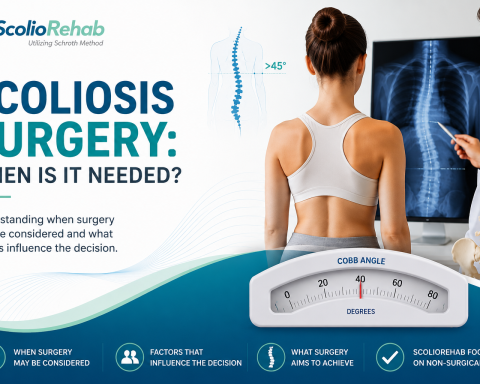
Electrotherapy may help some scoliosis patients manage pain, muscle tightness, or discomfort, but it does not straighten the spine or reduce the Cobb angle by itself.
This distinction is important.
Scoliosis is a three-dimensional spinal condition. Managing it properly often requires a more specific approach than general pain treatment. Depending on the patient’s age, curve type, symptoms, and progression risk, treatment may involve scoliosis-specific exercises, posture training, breathing techniques, strengthening, pain management, bracing guidance, and ongoing monitoring.
At ScolioRehab, electrotherapy may be considered as part of a broader physiotherapy or scoliosis management plan when clinically appropriate. It is not used as a standalone promise to “fix” scoliosis.
What Happens During an Electrotherapy Session?
A typical electrotherapy session may include the following steps:
1. Physiotherapy Assessment
Before treatment, your physiotherapist should assess your symptoms, movement, pain pattern, medical history, and treatment goals.
This helps determine whether electrotherapy is suitable for your condition.
2. Electrode Placement
Small adhesive electrode pads are placed on the skin near the affected area. The placement depends on the type of treatment and the goal of therapy.
3. Intensity Adjustment
The machine is turned on and the intensity is slowly adjusted. You should feel a comfortable sensation, not pain.
4. Treatment Period
The treatment is usually done for a set period of time. The duration depends on the condition and treatment plan.
5. Follow-Up Exercises or Rehab
After electrotherapy, your physiotherapist may guide you through mobility work, strengthening, posture correction, or other rehabilitation exercises.
This is important because electrotherapy should support the rehab process, not replace it.
How Many Sessions Do You Need?
There is no fixed number of electrotherapy sessions for everyone.
The number of sessions depends on:
- Your condition
- Pain severity
- Treatment goal
- How long you have had the problem
- Your response to treatment
- Whether you also follow your exercise program
- Whether there are underlying posture, strength, or movement issues
Some patients may feel temporary relief after one session. Others may need several sessions as part of a structured physiotherapy plan.
If there is no meaningful improvement after a reasonable period, your physiotherapist should review the treatment plan instead of continuing the same approach blindly.
When Should You See a Physiotherapist?
You should consider seeing a physiotherapist if you have:
- Pain that keeps coming back
- Pain that affects work, sleep, or daily activity
- Back, neck, shoulder, knee, or joint pain
- Muscle weakness
- Stiffness that does not improve
- Pain after injury
- Posture-related discomfort
- Scoliosis-related pain or tightness
- Difficulty moving normally
- Pain that worsens over time
You should seek medical attention urgently if you experience severe unexplained pain, sudden weakness, numbness, loss of bladder or bowel control, chest pain, fever, unexplained weight loss, or pain after major trauma.
Electrotherapy at ScolioRehab
At ScolioRehab, electrotherapy is a part of a physiotherapy or musculoskeletal rehabilitation plan, depending on the patient’s symptoms and assessment findings.
It may be recommended for pain management, muscle activation, muscle tightness, or recovery support when appropriate. However, ScolioRehab does not treat electrotherapy as a shortcut or miracle cure.
The focus is on understanding the patient’s condition properly and combining suitable treatment methods with active rehabilitation, posture correction, strengthening, and long-term management.
For scoliosis patients, electrotherapy may help with discomfort or muscle-related symptoms, but scoliosis-specific assessment and treatment remain important.
Frequently Asked Questions About Electrotherapy
What is electrotherapy in physiotherapy?
Electrotherapy is a treatment method that uses controlled electrical stimulation to support pain relief, muscle activation, and recovery. It is commonly used by physiotherapists for muscle, joint, nerve, and movement-related problems.
Is electrotherapy painful?
No, electrotherapy should not be painful when applied properly. Most patients feel tingling, pulsing, tapping, or mild muscle contraction. If it feels painful or uncomfortable, tell your physiotherapist immediately.
What is electrotherapy used for?
Electrotherapy may be used for pain relief, muscle activation, muscle tightness, joint discomfort, back pain, neck pain, shoulder pain, knee pain, sports injuries, and post-injury rehabilitation.
Is electrotherapy safe?
Electrotherapy is generally safe when used correctly by a trained physiotherapist. However, it may not be suitable for people with pacemakers, certain heart conditions, epilepsy, pregnancy concerns, broken skin, reduced sensation, or certain medical conditions.
Can electrotherapy help back pain?
Electrotherapy may help some patients manage back pain temporarily, especially when pain limits movement. However, long-term improvement usually requires proper assessment, strengthening, posture correction, and movement retraining.
Can electrotherapy cure scoliosis?
No. Electrotherapy cannot cure scoliosis or straighten the spine by itself. It may help manage pain or muscle tightness in some scoliosis patients, but scoliosis usually requires a more specific treatment approach.
What is the difference between TENS and NMES?
TENS is mainly used for pain relief. NMES is mainly used to stimulate muscle contraction and support muscle activation or strengthening. Your physiotherapist will choose the right type based on your condition and treatment goal.
How long does electrotherapy take?
The duration depends on the treatment type and patient condition. Your physiotherapist will decide the appropriate treatment time based on your assessment and response.
Is electrotherapy better than exercise?
No. Electrotherapy and exercise have different roles. Electrotherapy may help with pain relief or muscle activation, while exercise helps restore strength, movement, control, and function. For many conditions, active rehabilitation is more important for long-term recovery.
Do I need electrotherapy for every physiotherapy session?
Not necessarily. Electrotherapy should only be used when it fits your condition and treatment goal. Some patients may benefit from it, while others may need more exercise-based, manual therapy, or posture-focused treatment.