 scolioadmin
Imagine bending forward to pick something up when someone notices something unusual about your back.
“Why does one side look higher than the other?”
You look in the mirror and realise they’re right. One side of your upper back seems more prominent, almost as though your ribs are sticking out.
Naturally, you start wondering: Is this normal? Is it scoliosis? And can the unevenness be corrected?
What you’re noticing may be a rib hump, also known as rib prominence.
A rib hump is one of the visible signs associated with scoliosis, particularly when the spinal curve involves the upper or middle back.
However, not every uneven back is caused by scoliosis, and a visible rib hump doesn’t automatically mean someone has a severe spinal condition.
The important thing is understanding what’s happening beneath the surface.
Let’s explore what causes a rib hump, why it becomes more noticeable when bending forward, how it is assessed, and whether treatment can help reduce its appearance.
What Is a Rib Hump?
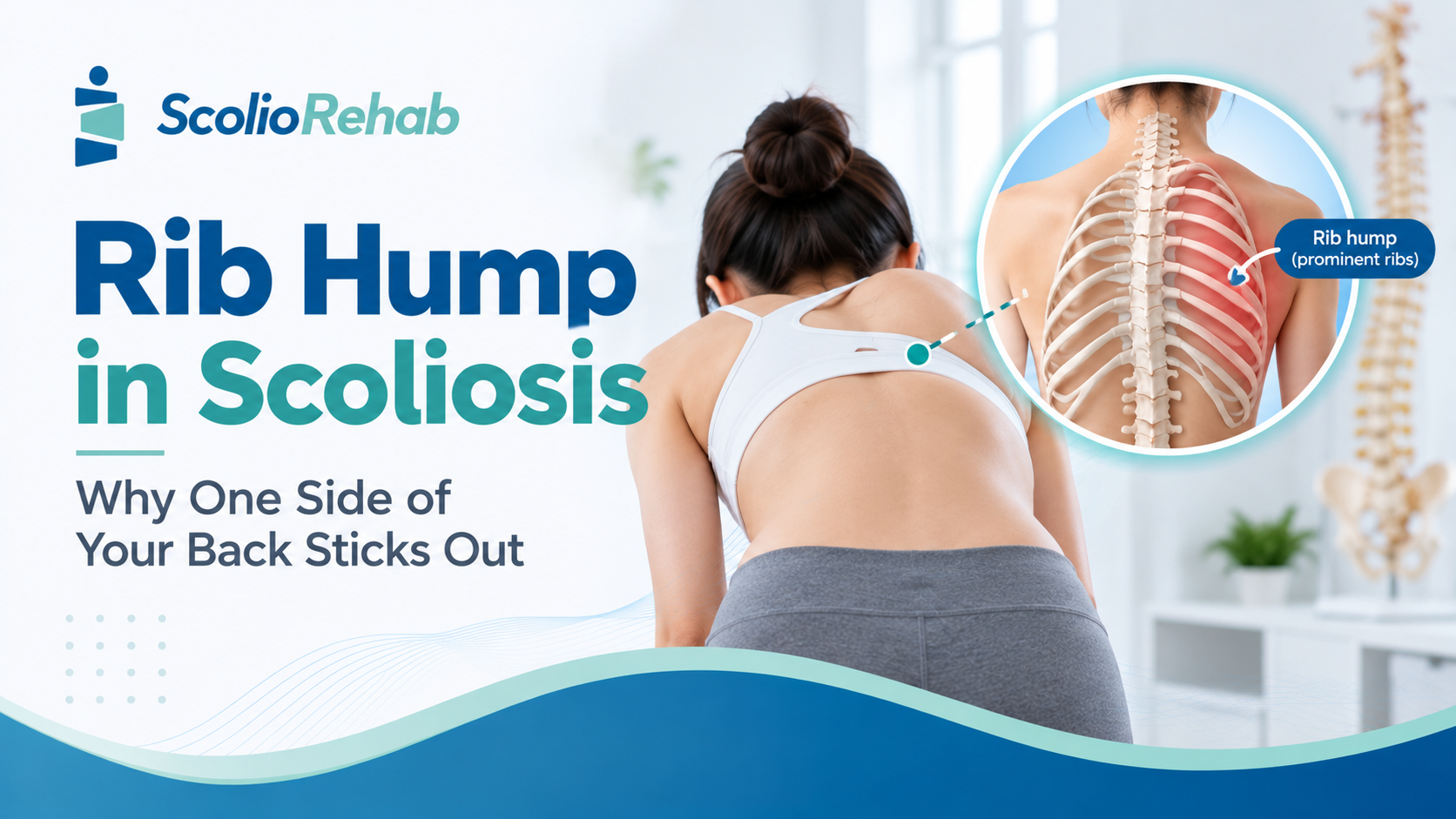
A rib hump is a visible prominence on one side of the back, usually caused by rotation of the spine and rib cage in someone with thoracic scoliosis.
Instead of both sides of the back appearing relatively symmetrical, one side may look raised, rounded, or more prominent.
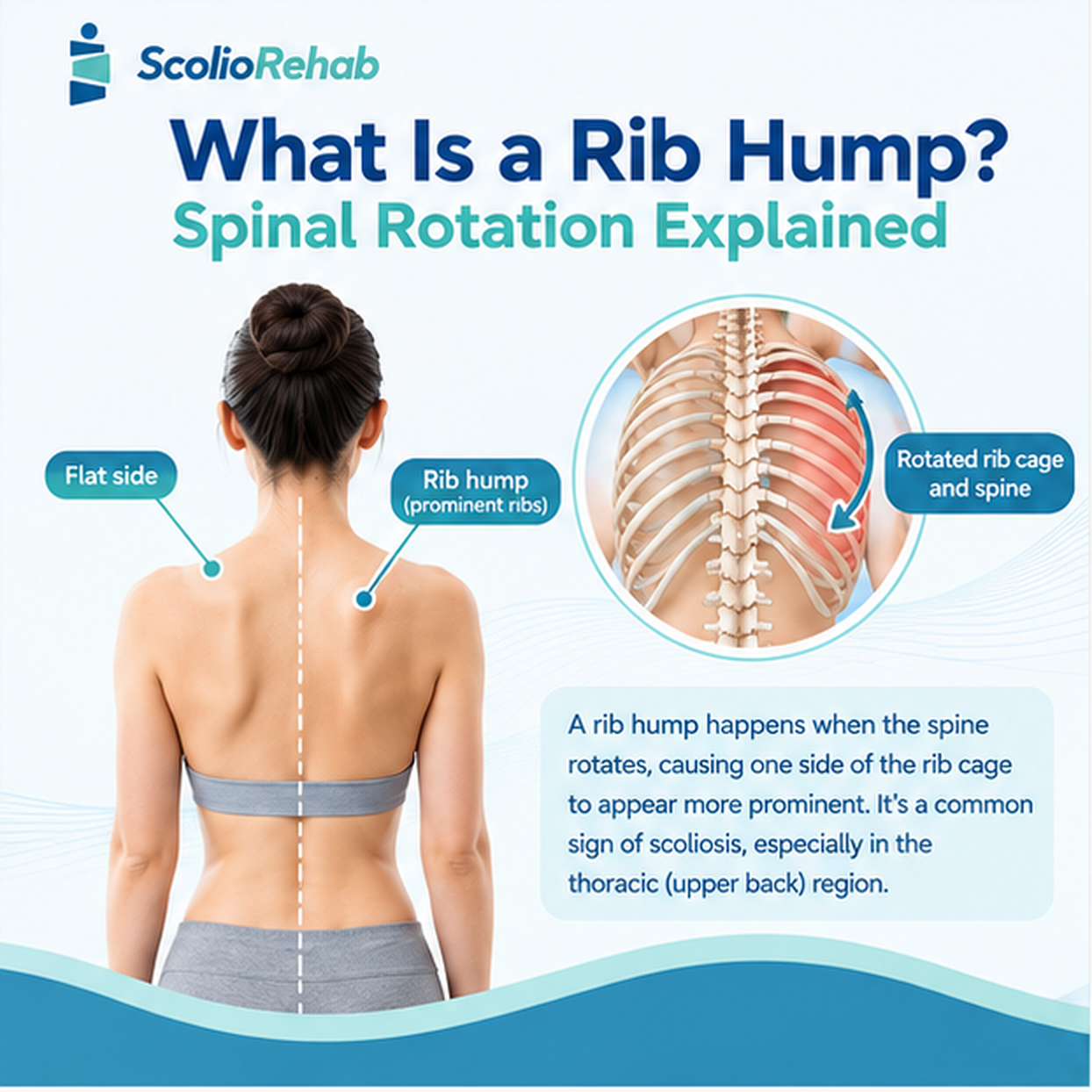
It is often easiest to notice when a person bends forward.
You might observe:
- One side of the upper back appearing higher.
- A raised area near the ribs when bending forward.
- One shoulder blade appearing more prominent.
- An uneven shape across the rib cage.
- Clothing fitting differently around the upper body.
Here’s the important part:
A rib hump doesn’t necessarily mean your ribs are growing abnormally or that one rib is simply sticking out of place.
In many scoliosis cases, it develops because the spine rotates and influences the position of the attached ribs.
The Scoliosis Research Society identifies rib cage asymmetry and a visible rib hump during forward bending as common signs clinicians look for when assessing scoliosis.
Why Does Scoliosis Cause a Rib Hump?
To understand why a rib hump develops, we need to look beyond the familiar image of an S-shaped spine.
Many people think scoliosis is simply a sideways curvature of the spine.
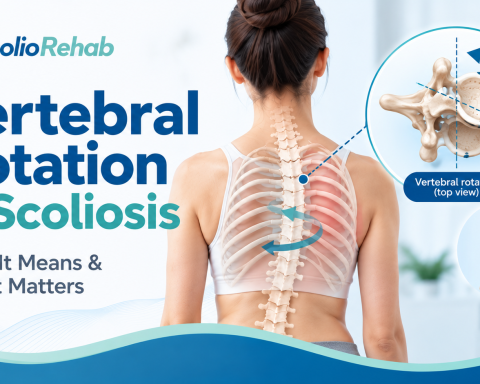
But scoliosis is a three-dimensional spinal deformity.
That means the spine can curve sideways while also rotating around its vertical axis.
How Spinal Rotation Affects Your Rib Cage
Your ribs connect to the vertebrae in the thoracic region of your spine.
When these vertebrae rotate as part of a structural scoliosis curve, the attached ribs can change position along with them.
On one side, the ribs may become more prominent toward the back.
On the opposite side, the rib cage may appear relatively flatter.
This creates the asymmetrical appearance commonly described as a rib hump.
Think of it this way:
It’s not just the spine bending sideways. It’s the spine and rib cage changing their three-dimensional alignment.
This is also why two people with scoliosis may have very different back appearances, even when their Cobb angles are similar.
The visible rib prominence depends on several factors, including spinal rotation, curve location, rib cage anatomy, and individual body shape.
If you’re unfamiliar with scoliosis itself, start with our guide to what scoliosis is and how it affects the spine.
Why Is a Rib Hump More Visible When Bending Forward?
Have you noticed that someone’s back looks relatively normal when standing upright, but one side becomes noticeably raised when they bend forward?
There’s a reason for that.
When you stand upright, the shape of your back may make certain differences in rib cage alignment less obvious.
However, bending forward can make rotational asymmetry easier to observe.
The raised side of the rib cage becomes more visible when the examiner looks across the back.
This is why healthcare professionals commonly use the Adam’s Forward Bend Test during scoliosis screening.
During the test, the person bends forward while the clinician looks for:
- Uneven rib prominence.
- Differences in back height.
- Trunk rotation.
- Asymmetry around the waist or lower back.
The test helps identify signs that may require further assessment.
However, it cannot confirm scoliosis or determine the size of a spinal curve by itself.
A rib hump may also be visible while standing, particularly when trunk asymmetry is more pronounced.
Does Having a Rib Hump Always Mean You Have Scoliosis?
No. A visible difference between the two sides of your back doesn’t automatically mean you have scoliosis.
Although a rib hump is strongly associated with spinal rotation in scoliosis, several other factors can make one side of the back look more prominent.
These may include:
Natural Body Asymmetry
Human bodies aren’t perfectly symmetrical.
Minor differences in muscle development, rib cage shape, and skeletal anatomy can affect how the back looks.
Small, longstanding differences without symptoms or progression may simply reflect normal variation.
Shoulder Blade Positioning
Sometimes, what appears to be a rib hump is actually a prominent shoulder blade.
The shoulder blades, also called scapulae, rest against the rib cage and move during arm and shoulder movements.
Differences in shoulder-blade positioning, previous injuries, or muscle function may create an uneven appearance.
In certain cases, scapular winging can make one shoulder blade stick out noticeably.
Chest Wall or Rib Cage Differences
Some people have variations in the shape of their chest wall or rib cage that are unrelated to scoliosis.
Previous injuries or other structural conditions may also affect the contour of the ribs.
Because these conditions can look similar from the outside, visual appearance alone isn’t enough to identify the cause.
If the asymmetry is persistent, new, or becoming more noticeable, a professional assessment is the best way to understand what is happening.
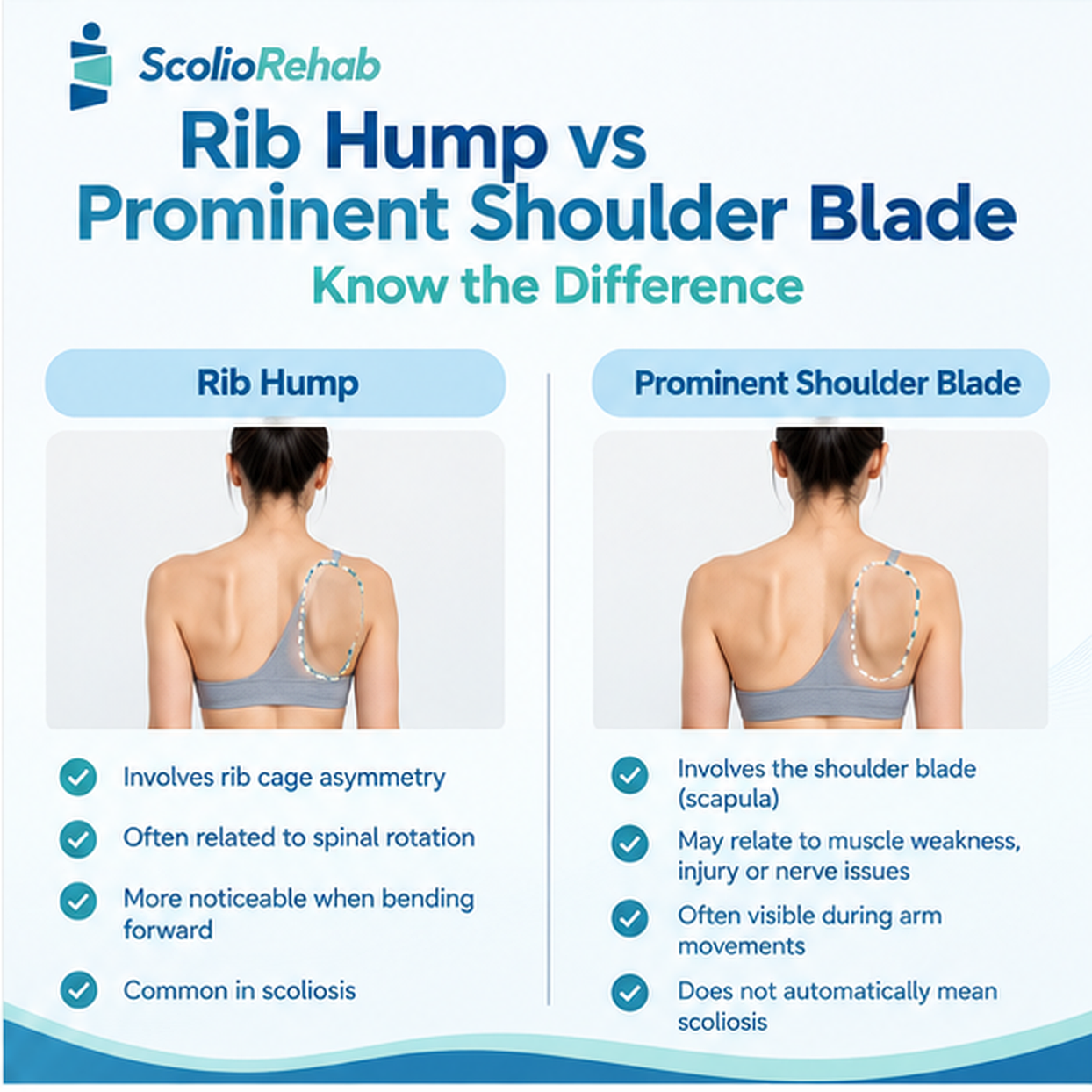
Rib Hump vs Prominent Shoulder Blade: What’s the Difference?
These two appearances are easy to confuse.
| Rib Hump | Prominent Shoulder Blade |
|---|---|
| Often involves asymmetry of the rib cage | Primarily involves the shoulder blade |
| May be associated with spinal rotation | May relate to shoulder-blade movement, injury, or nerve and muscle function |
| Often more noticeable during forward bending | May become more noticeable during arm movements |
| Can be a sign of thoracic scoliosis | Does not automatically indicate scoliosis |
| May require spinal assessment | May require shoulder and neurological assessment |
It’s also possible for someone with scoliosis to have both rib cage prominence and shoulder-blade asymmetry.
The distinction matters because treatment needs to address the underlying cause rather than simply the visible appearance.
Can You Have a Rib Hump Without Back Pain?
Yes.
In fact, many children and teenagers with scoliosis experience little or no back pain.
Their spinal curvature may first be noticed because of a change in body appearance rather than physical discomfort.
For example, parents may notice:
- One side of their child’s back becoming more prominent.
- An uneven shoulder line.
- A shirt hanging differently.
- Changes in waistline symmetry.
- A visible raised area during forward bending.
This is particularly relevant during adolescence, when growth can influence scoliosis progression.
The absence of pain does not rule out scoliosis.
Likewise, the presence of back pain doesn’t automatically mean a visible rib hump is responsible for that pain.
The Scoliosis Research Society’s adolescent scoliosis information describes rib prominence as a common physical finding even in patients who have no neurological symptoms or significant discomfort.
Can a Rib Hump Get Worse Over Time?
It can, particularly when the underlying scoliosis curve progresses.
For children and teenagers, periods of rapid growth deserve special attention.
A spinal curve that is progressing during growth may also be accompanied by increasing trunk rotation or visible rib cage asymmetry.
However, the relationship isn’t perfectly predictable.
A larger Cobb angle doesn’t always mean a more prominent rib hump.
Similarly, a visible change in rib prominence doesn’t necessarily mean the Cobb angle has increased by the same amount.
Several factors influence the appearance:
- The location of the scoliosis curve.
- The degree of spinal rotation.
- The shape and flexibility of the rib cage.
- The patient’s growth stage.
- Changes in the underlying spinal curve.
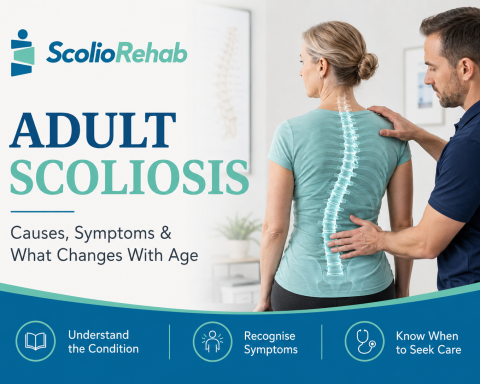
Adults may also experience changes in spinal alignment over time, although the causes and management considerations can differ from those in growing adolescents.
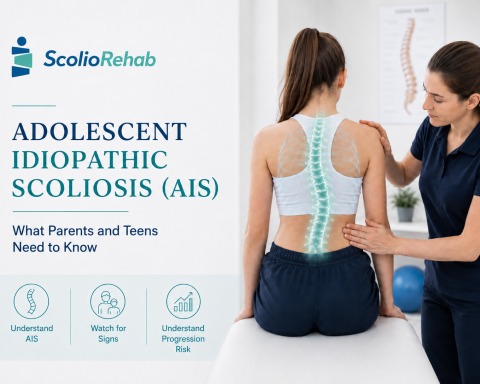
For parents concerned about progression during the teenage years, our adolescent idiopathic scoliosis guide explains why growth stage matters.
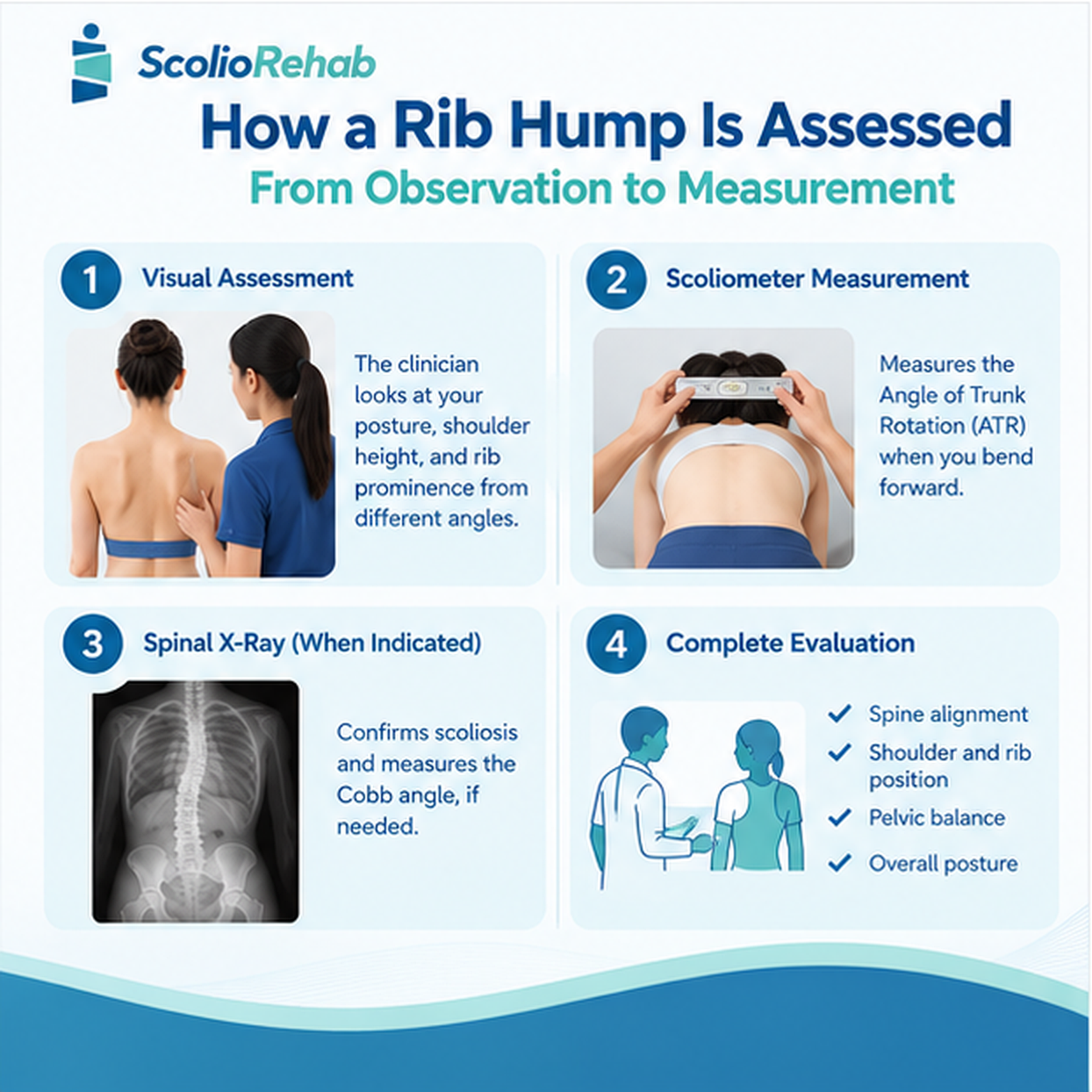
How Is a Rib Hump Measured?
A clinician doesn’t assess rib prominence simply by looking at how large it appears.
An examination may involve observing the shape of the back, checking for trunk rotation, and evaluating whether further spinal investigations are needed.
1. Visual Assessment
The clinician observes the back while the patient stands and bends forward.
They may look for a raised area around the ribs, differences in waist contour, and other signs of spinal asymmetry.
2. Scoliometer Measurement
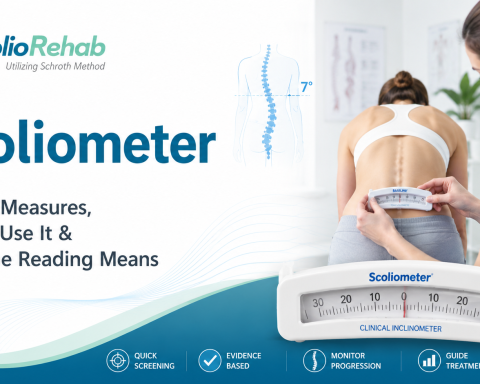
A scoliometer is a handheld instrument used to measure the Angle of Trunk Rotation (ATR).
It can help quantify rotational asymmetry when the patient bends forward.
However, a scoliometer reading is not the same as the Cobb angle.
For example, a reading of 7° ATR does not mean someone has a 7° spinal curve.
Our dedicated guide to the scoliometer and how trunk rotation is measured explains the process, measurements, and their interpretation.
3. Spinal X-Ray When Indicated
If the clinical assessment suggests structural scoliosis, a clinician may recommend standing spinal X-rays.
These help confirm scoliosis and measure the sideways curvature using the Cobb angle.
An X-ray also provides information about spinal alignment, although additional assessment may be needed to understand rotational or cosmetic asymmetry.
To learn how spinal curve severity is assessed, read our guide to the Cobb angle in scoliosis.
Can Photos Help Track a Rib Hump?
Photographs may help document visible differences over time when taken under consistent conditions.
If advised by your clinician, use similar lighting, positioning, camera height, and distance for each photograph.
However, photos cannot reliably measure spinal curvature or confirm progression.
A difference in how someone bends or stands can change how the hump appears.
Avoid using daily photographs as a substitute for proper clinical follow-up.
Can a Rib Hump Be Reduced?
This is probably the question you’re most interested in.
In some cases, the appearance of a rib hump may improve with appropriate scoliosis management. However, complete correction cannot be guaranteed.
The realistic outcome depends on the underlying spinal condition, curve flexibility, growth stage, and treatment approach.
It’s important to distinguish between two goals:
- Improving visible trunk or rib cage asymmetry.
- Managing the underlying scoliosis curve and its risk of progression.
These goals are related, but they aren’t identical.
Someone may experience improvement in posture or trunk symmetry without a major change in Cobb angle.
Conversely, changes in spinal curvature may not produce an equally noticeable change in rib prominence.
Let’s look at the available approaches.
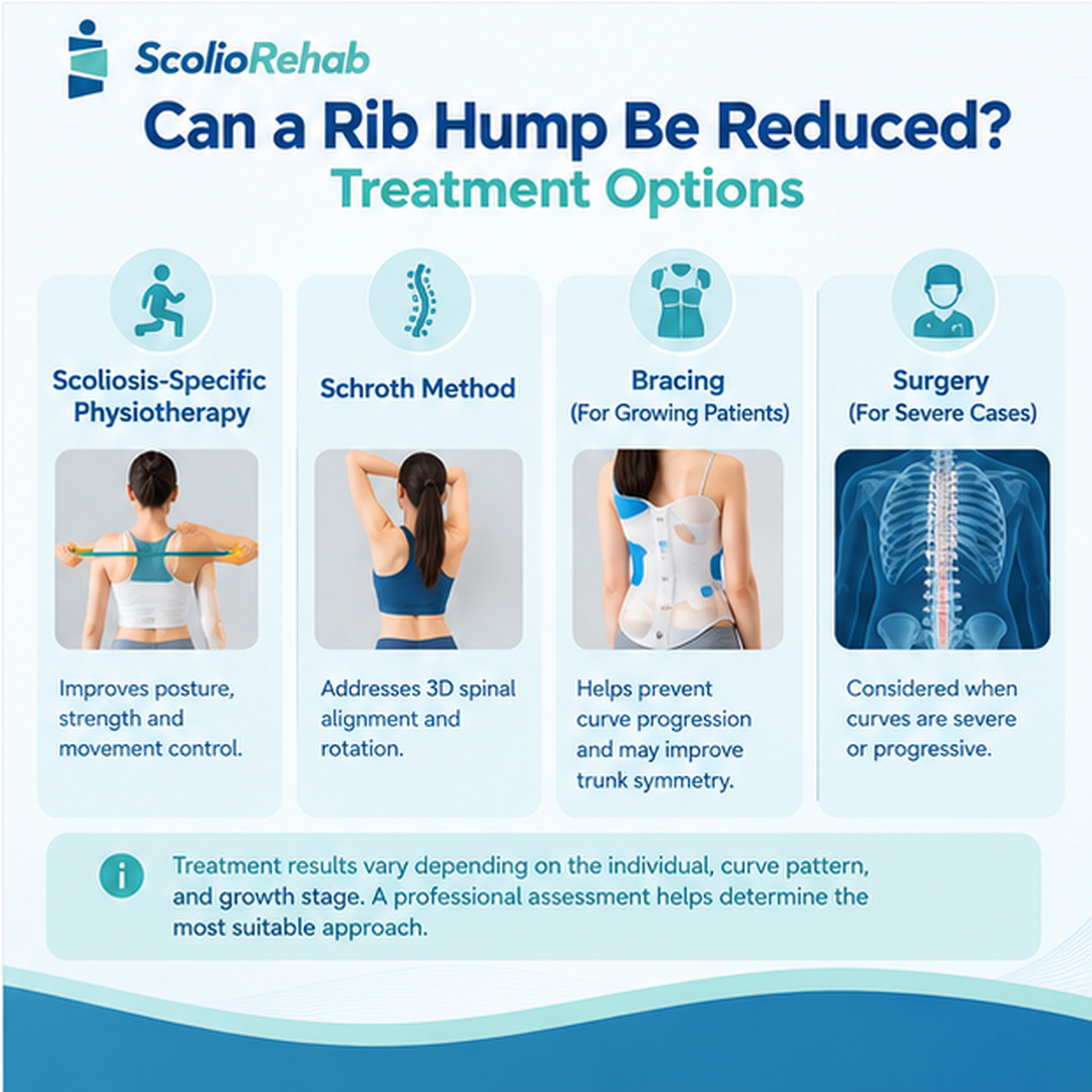
1. Scoliosis-Specific Physiotherapy
For suitable patients, scoliosis-specific physiotherapy may help improve postural control, body awareness, movement, and trunk symmetry.
Unlike a general back-exercise programme, scoliosis-specific rehabilitation considers the individual’s curve pattern and rotational asymmetry.
For example, a rehabilitation programme may focus on:
- Three-dimensional postural correction.
- Trunk elongation and control.
- Individualised movement strategies.
- Muscle endurance and stability.
- Breathing mechanics.
- Applying corrected positioning during daily activities.
The SOSORT guidelines on non-surgical scoliosis management discuss evidence supporting physiotherapeutic scoliosis-specific exercises in selected patients.
Some studies have reported improvements in trunk rotation or related measures, but results vary and the evidence does not support promising complete rib hump correction.
2. The Schroth Method
The Schroth Method is a form of scoliosis-specific rehabilitation that considers the three-dimensional nature of spinal deformity.
Rather than treating scoliosis as only a sideways curve, it incorporates spinal rotation, trunk asymmetry, and breathing strategies into individualised exercises.
For patients with rib cage asymmetry, this may involve learning how to improve postural control and use specific breathing and movement techniques appropriate to their curve.
However, there is no universal Schroth exercise that fixes every rib hump.
The correct approach depends on the individual’s spinal curve pattern, flexibility, and clinical findings.
Our Schroth Method guide explains how this rehabilitation approach works and who may benefit.
3. Scoliosis Bracing
For growing children and teenagers with an appropriate scoliosis diagnosis, bracing may be recommended to reduce the risk of curve progression.
Modern scoliosis braces are often designed around the patient’s individual spinal curvature and three-dimensional alignment.
Some brace designs aim to influence rotational alignment as well as sideways curvature.
However, bracing is primarily used to manage scoliosis progression rather than simply improve the appearance of a rib hump.
A brace also isn’t suitable for every patient.
The decision depends on factors such as curve magnitude, skeletal maturity, progression risk, and specialist recommendations.
ScolioRehab offers the Gensingen Brace Weiss (GBW) as part of its non-surgical scoliosis care for suitable patients.
4. Surgery for Severe Scoliosis
Surgical treatment may be considered for certain severe or progressive scoliosis curves after specialist evaluation.
Spinal surgery aims to address the underlying deformity and stabilise the spine.
Some patients may experience improvements in trunk or rib prominence following surgery, but a residual rib hump can remain.
In selected cases, surgeons may consider additional procedures to address significant rib prominence.
These procedures involve important risks and require careful specialist assessment.
Surgery is not routinely recommended simply because a person dislikes the appearance of a mild rib hump.
The decision must consider spinal severity, progression, overall health, symptoms, expected benefits, and potential complications.
Can Stretching or Massage Fix a Rib Hump?
If a rib hump is caused by structural spinal and rib cage rotation, stretching or massaging the raised area cannot simply return the ribs to a normal position.
This is an important misconception.
You may come across videos promising to correct a rib hump through:
- A single twisting exercise.
- Aggressive stretching on one side.
- Massaging the raised ribs.
- Applying pressure directly to the hump.
- Practising the same corrective routine every day.
These approaches may sound appealing because they promise a simple solution.
But scoliosis curves vary considerably, and the visible prominence may involve structural changes rather than muscle tightness alone.
General exercise may still support strength, fitness, mobility, and comfort.
However, that should not be confused with correcting the underlying rotational deformity.
Avoid forcefully manipulating the ribs or performing painful corrective exercises without professional guidance.
When Should You Get a Rib Hump Checked?
Not every minor difference in back shape is a medical emergency.
However, certain situations deserve assessment.
Consider arranging a professional evaluation if:
- You notice a persistent rib hump when bending forward.
- One side of the back is becoming more prominent.
- Your child develops noticeable back asymmetry during a growth spurt.
- The rib prominence appears together with uneven shoulders or hips.
- You have known scoliosis and notice changes in trunk appearance.
- You experience persistent back discomfort or changes in movement.
- You are concerned about a new or unexplained difference in rib cage shape.
For growing children and teenagers, timely assessment is particularly useful because progression risk may be higher during rapid growth.
Seek urgent medical attention if new back or rib asymmetry follows significant trauma or is accompanied by severe pain, breathing difficulty, new weakness, or other concerning neurological symptoms.
If a rib hump is suspected to be related to scoliosis, a clinician can help determine whether the next step should be monitoring, further investigation, or treatment.
Rib Hump and Scoliosis Assessment in Malaysia
If you’ve noticed that one side of your back sticks out when bending forward, the first step isn’t trying to force the raised area into a flatter position.
It’s understanding whether the prominence comes from spinal rotation, rib cage anatomy, shoulder-blade positioning, or another underlying factor.
At ScolioRehab, our clinical focus is on scoliosis assessment and non-surgical spinal rehabilitation.
For patients with suspected or diagnosed scoliosis, an assessment may consider:
- Visible rib cage and trunk asymmetry.
- Spinal curve pattern.
- Trunk rotation.
- Cobb angle where imaging is available.
- Age and skeletal maturity.
- Progression risk.
- Symptoms, function, and individual goals.
For appropriate patients, management may include scoliosis-specific rehabilitation using Schroth-based principles, ongoing monitoring, and bracing when indicated.
Not every rib prominence is related to scoliosis, and not every scoliosis curve requires active treatment.
Understanding the diagnosis helps determine which approach is appropriate.
Concerned About a Rib Hump or Possible Scoliosis?
ScolioRehab provides scoliosis-focused assessment and rehabilitation services in Malaysia.
Whether you’ve noticed a new asymmetry or already have a scoliosis diagnosis, understanding your spinal alignment can help you make informed decisions about the next steps.
Contact us to enquire about a scoliosis assessment.
Frequently Asked Questions About Rib Hump
1. Is a rib hump always caused by scoliosis?
No. Although a rib hump is commonly associated with rotational changes in thoracic scoliosis, other factors such as shoulder-blade positioning, chest wall anatomy, or previous injuries may cause an uneven back appearance. A professional assessment helps identify the cause.
2. Can a mild scoliosis curve cause a visible rib hump?
Yes. The appearance of a rib hump depends partly on spinal rotation and rib cage anatomy, not only on Cobb angle. Some people with relatively smaller curves may have noticeable asymmetry, while others with larger curves may have less obvious rib prominence.
3. Does a rib hump mean scoliosis is getting worse?
Not necessarily. A visible rib hump does not prove that the spinal curve has progressed. Changes in position, lighting, or body shape can affect its appearance. However, a newly noticeable or increasingly prominent hump should be assessed, especially during adolescence.
4. Can a rib hump go away on its own?
Sometimes, an apparent rib prominence is positional or related to non-structural asymmetry. However, a rib hump associated with structural scoliosis is unlikely to disappear simply by changing posture. Whether meaningful improvement is possible depends on the underlying condition and treatment response.
5. Can Schroth exercises reduce a rib hump?
Schroth-based exercises may improve postural control and trunk symmetry in selected patients. Some studies have reported improvements in rotational measures, but the results vary. A programme should be individualised, and complete rib hump correction cannot be guaranteed.
6. Does a rib hump cause pain?
Not necessarily. Many children and teenagers with scoliosis-related rib prominence have little or no pain. When pain is present, other musculoskeletal or spinal factors may contribute and should be evaluated.
7. Why is my rib hump only on the right or left side?
A rib hump can be more prominent on one side because of the direction and location of spinal and rib cage rotation. However, the visible side alone cannot reliably identify the full spinal curve pattern or determine the severity of scoliosis.
8. Can a rib hump affect breathing?
A small rib hump by itself does not usually indicate a breathing problem. However, severe thoracic spinal deformities can sometimes affect chest wall mechanics and respiratory function. Any unexplained breathing difficulty requires medical evaluation.
9. Will a rib hump disappear after scoliosis surgery?
Not always. Surgery may improve trunk alignment and reduce visible prominence, but some rib cage asymmetry may remain. Surgical outcomes depend on the spinal deformity, rib cage structure, procedure, and individual patient factors.
10. At what age should a rib hump be checked?
A persistent or unexplained rib hump can be assessed at any age. However, early evaluation is particularly important in children and teenagers because scoliosis may progress during periods of rapid growth.
Final Thoughts: A Rib Hump Is a Sign Worth Understanding
Noticing that one side of your back sticks out can be worrying, especially when you’re unsure what it means.
But a rib hump doesn’t automatically indicate severe scoliosis or mean that surgery will be necessary.
For some people, it may reflect relatively mild asymmetry.
For others, particularly growing teenagers, it may be an important sign that the spine and rib cage should be assessed more closely.
The most important thing to remember is that a rib hump is not just about appearance. It may provide useful information about how the spine and rib cage are aligned.
Rather than searching for a quick exercise to flatten the raised area, focus on identifying the cause, understanding whether the condition is progressing, and exploring appropriate care when needed.
Early assessment doesn’t always mean treatment is necessary. Sometimes, it simply means knowing what to monitor and having a clearer understanding of your spinal health.
Medical References
- Scoliosis Research Society — Diagnosing Scoliosis
Describes rib prominence, the forward bend test, and scoliosis assessment. - Scoliosis Research Society — Adolescent Idiopathic Scoliosis
Explains the rotational nature of scoliosis and the appearance of rib humps. - SOSORT Guidelines — Orthopaedic and Rehabilitation Treatment of Idiopathic Scoliosis During Growth
Reviews scoliosis-specific exercises, bracing, and assessment principles. - NHS — Scoliosis Treatment in Children
Provides guidance on monitoring, bracing, exercise, and surgical treatment decisions. - Stokes — Axial Rotation Component of Thoracic Scoliosis
Investigates the relationship between vertebral rotation, rib rotation, and visible rib hump deformity.
Medical disclaimer: This article is for general educational purposes and does not replace medical diagnosis, professional advice, or individualised treatment. Anyone concerned about progressive back asymmetry, suspected scoliosis, or unexplained symptoms should consult a qualified healthcare professional.