What is
Schroth Method?
All you need to know about schroth method
A scoliosis-specific approach to correct & stabilize spinal curve
Evidence-based, individualized, non-surgical.
Helping patients of all ages lead a healthier, more active life
Understanding Schroth Method
The Schroth Method is a non-surgical treatment for scoliosis that uses specific exercises tailored to each person’s unique spine curve. These exercises work in three dimensions (up and down, side to side, and rotation) to address the spine from all angles.
The main goal is to improve body mechanics and stabilize the spine to prevent the curve from getting worse. For children and teens, the aim is to reduce the curve when possible, while for adults, the focus also includes pain management.
The method helps balance and stabilize the spine by gently stretching and rotating the spine and rib cage to bring the body back to a more natural position. Unlike typical exercises, Schroth exercises target the core and trunk, but also consider the entire body’s alignment to create better posture.
A key part of the treatment is something called corrective rotational breathing (or rotational angular breathing), which helps strengthen the muscles supporting the spine while in the corrected posture.
Key Principles
- Individualized treatment based on curve pattern
- Active patient participation
- Correction through specific exercises
- Education for long-term self-management
Rotational angular breathing
When someone has scoliosis, their body doesn’t move or breathe in a normal way. This can make the curve in the spine get worse over time. The muscles on both sides of the spine also become uneven, which adds to the problem.
In the Schroth Method, patients learn how to stretch the muscles on the inner side of the curve (the concave side) and tighten the muscles on the outer side of the curve (the convex side). They also work on changing their breathing pattern to help prevent the curve from getting worse. When breathing in, patients focus on expanding the side of their body that is more collapsed. When breathing out, they contract their muscles to help strengthen and stabilize the area around the spine.
Using a brace that aligns with the principles of the Schroth method allows patients to maintain corrected posture during daily activities. The brace provides structural support, while the exercises retrain muscles and improve posture in the long term. This combination helps prevent curve progression, promotes spinal alignment, and supports healthier movement patterns. At ScolioRehab Ipoh, we ensure this compatibility to maximize the effectiveness of both treatments for our patients.
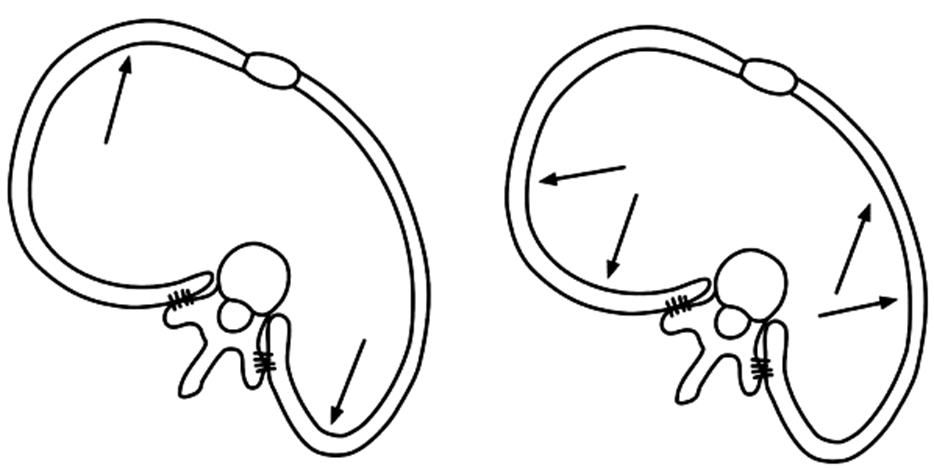
Example of the altered breathing mechanics with scoliosis (L);
Example of Schroth rotational angular breathing to improve breathing mechanics (R)
Benefits of Schroth Method
Here are some benefits of the Schroth Method for scoliosis treatment:
Improves Posture
Helps correct uneven posture by focusing on spinal alignment and body positioning.
Reduces Curve Progression
Can help prevent the scoliosis curve from getting worse over time, especially when started early.
Strengthens Core Muscles
Targets muscles around the spine, improving stability and support for better posture and movement.
Pain Relief
Helps alleviate pain by reducing strain on the muscles and spine.
Increases Flexibility
Improves flexibility by stretching tight muscles on one side of the body and strengthening the other.
Enhances Breathing
Teaches a special breathing technique that helps expand the chest and ribcage, which can improve lung function and posture.
Non-Surgical Treatment
Provides a non-invasive approach to managing scoliosis, avoiding the need for surgery in many cases.
Personalized Treatment
Exercises are tailored to each patient’s unique spinal curve for maximum effectiveness.
Improves Body Awareness
Helps patients become more aware of their body’s movements and posture, promoting long-term spine health.
Improves Quality of Life
With better posture, less pain, and increased function, patients often experience a better quality of life.
Who Can Benefit From Schroth Method?
The Schroth Method may be suitable for children, teenagers, or adults with scoliosis, depending on their curve pattern, symptoms, age, and treatment goals. It may be especially helpful for patients who want a conservative approach to scoliosis management. A proper assessment is needed to determine whether it is suitable.
Adolescents
Idiopathic scoliosis during growth phase to reduce progression risk
Adults
Manage pain, improve posture and function in adult scoliosis
Post-Surgical Patients
Support rehabilitation and maintain spinal alignment
Athletes & Active Individuals
Improve posture, breathing and body performance
Treatment suitability is determined through a professional assessment
Schroth Method vs General Physiotherapy
| Aspect | Schroth Method | General Physiotherapy |
|---|---|---|
|
Approach |
Scoliosis-specific and correction |
General pain relief and strengthening |
|
Assessment |
Detailed scoliosis-specific assessment |
General movement assessment |
|
Exercises |
Individualised, curve-specific exercises |
General exercises |
|
Breathing |
Rotational breathing techniques |
Not specifically addressed |
|
Goal |
Correct, stabilize, and prevent progression |
Pain, relief, mobility, strength |
FAQ
Can the Schroth Method reduce Cobb angle?
The Schroth Method may help improve posture, muscle balance, breathing mechanics, and curve management. In some cases, it may support Cobb angle improvement or help slow curve progression, especially when started early and performed consistently. However, results vary depending on age, curve severity, growth stage, brace use, and consistency with the exercise program.
How long does it take to see results from the Schroth Method?
The timeline varies from person to person. Some patients may notice better posture awareness or reduced discomfort within a few weeks, while structural or measurable changes usually require consistent practice over several months. Results depend on the curve type, severity, age, treatment plan, and how regularly the exercises are performed.
Is the Schroth Method painful?
No. However, some patients may feel muscle fatigue, stretching, or mild discomfort when learning new postural corrections, especially at the beginning. Exercises should be guided and adjusted according to the patient’s condition and tolerance.
Can the Schroth Method replace scoliosis surgery?
The Schroth Method is a conservative, non-surgical approach. It may help manage posture, pain, function, and curve progression in suitable cases, but it does not replace surgery when surgery is medically necessary. Severe curves or rapidly progressing scoliosis should be assessed by a qualified healthcare professional.
How often should Schroth exercises be done?
The frequency depends on the individual treatment plan. Many patients are given a home exercise program to practise regularly between supervised sessions. Consistency is important because Schroth is not only about doing exercises in the clinic, but also learning how to apply corrected posture in daily life.
Is there scientific evidence for the Schroth Method?
Yes, there is scientific evidence supporting the Schroth Method as a scoliosis-specific exercise approach, especially for adolescent idiopathic scoliosis. Research suggests that Schroth exercises may help improve Cobb angle, trunk rotation, posture, quality of life, and curve management when performed consistently and under proper supervision. However, results can vary depending on age, curve severity, growth stage, bracing needs, and exercise compliance. Schroth should be viewed as part of a conservative scoliosis management plan, not as a guaranteed cure or replacement for medical assessment.